
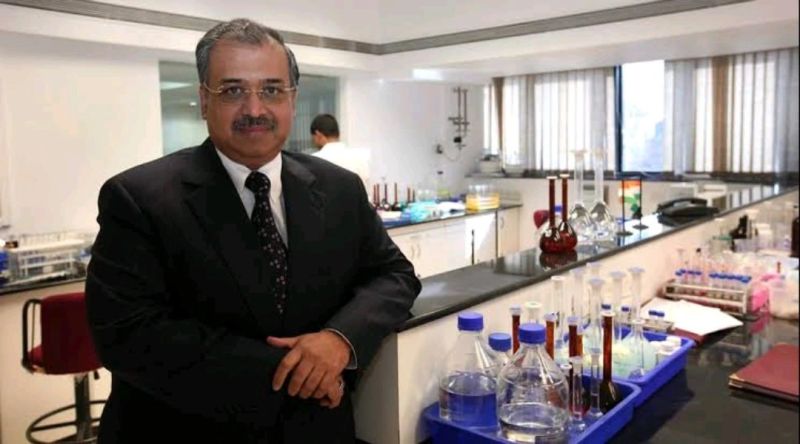
In 1982, after completing his graduation, Dilip Shanghvi assisted in his father’s wholesale medicine shop in Kolkata, where generic drugs with slim profit margins were sold. Facing this challenge, Dilip sought a solution.Recognizing the high margins and limited supply of psychiatry drugs from major pharmaceutical companies, Dilip seized the business opportunity. He borrowed Rs 10,000 from his father, and in 1982, Sun Pharma was established.The concept was straightforward – to manufacture and distribute Lithosan, a bipolar disorder drug not available in the Eastern parts of India. Utilizing his friend’s equipment, Dilip initiated a 3,000 sq ft factory in Vapi, Gujarat.By the end of the first year, Sun Pharma achieved sales of 7.5 Lakhs with five drugs. Responding to growing demand, Dilip expanded into cardiology and gastroenterology products in 1987.Introducing new products, Dilip expanded Sun Pharma’s reach to the West Coast and began exporting, establishing offices in Toronto and Moscow. The turning point arrived.In December 1994, Sun Pharma went public, reaching a valuation of 500 CR and becoming the first Indian pharmaceutical company to have an IPO oversubscribed by 55 times. Competitors like UK-based GSK and homegrown Cipla captured 15% market share, prompting Dilip to devise a strategy.Anticipating that competition wouldn’t extend beyond India, Dilip acquired USA’s Caraco Pharma and a 44.3% stake in the UK’s MJ Pharma, positioning Sun Pharma to enter the US and UK markets.The acquisitions proved successful, contributing 50 CR in sales from the USA and UK. Dilip expanded further by purchasing respiratory brands from NATCO Pharma and ophthalmology products from Milmet Labs, propelling Sun Pharma into India’s Top 10 Pharma companies in 1999.Sun Pharma continued to grow, establishing factories in Jammu, Dadra, and Silvassa, selling three billion tablets by 2002. It climbed to India’s Top 5 and became the largest Indian Pharma company in the USA. Dilip demonstrated expertise in acquisitions and product launches, but the challenges persisted.In 2014, the USFDA began granting licenses for generic drugs in bulk, prompting Dilip to anticipate the Top 4 pharmaceutical companies’ response. In a strategic move on March 25, 2015, Sun Pharma acquired Ranbaxy for 2000 CR in an all-stock deal, creating a combined entity with 3000 CR in revenue and 47 facilities across five continents. Today, Sun Pharma boasts an annual revenue of approximately 40,000 CR, ranking as India’s No. 1 and the world’s 4th largest generic pharmaceutical company. With a net worth of 150,000 CR, Dilip Shangvi became a household name, surpassing Mukesh Ambani as India’s richest man in 2015.

FMCG bets big on tech
FMCG giants in India are increasingly adopting real-time data exchange and demand forecasting methods to prevent stockouts on quick-commerce (Q-comm) platforms, according to a report by Ratna Bhushan for The Economic Times. For example, ITC is exploring the use of electronic data interchange and has integrated it with major accounts to facilitate faster information exchange, revealed Sandeep Sule, Divisional Chief Executive, Trade Marketing and Distribution at ITC. Similarly, Nestle is partnering with Q-comm platforms to monitor stock levels at distribution centers, ensuring product availability for consumers, as stated by a spokesperson from the company. The driving force behind this trend is the significant contribution of Q-comm platforms such as Zepto, Blinkit, and Swiggy Instamart, accounting for approximately 30-50% of e-commerce sales for FMCG companies, as mentioned in the report. Anticipated trends include: 1. **Hyper-localization and Personalized Experiences:** Q-commerce will extend beyond speed, providing hyper-localized product assortments and personalized recommendations based on local demand and individual preferences. This will necessitate deeper collaboration. 2. **Sustainability and Ethical Sourcing:** Consumers are increasingly selecting products based on their impact. Q-comm can utilize data to reduce the carbon footprint, while FMCG giants can offer transparency about their practices. 3. **Subscription Models and Loyalty Programs:** With intensifying competition, Q-comm platforms and FMCG giants will explore subscription models and personalized loyalty programs. 4. **Integration with Physical Stores:** The boundaries between online and offline will further blur. Q-comm platforms can serve as extensions of physical stores, providing click-and-collect options, in-store fulfillment, and seamless returns. 5. **The Rise of New Technologies:** Emerging technologies such as AI, automation, and robotics will further revolutionize Q-comm. Automated picking and packing in dark stores, drone deliveries, and self-driving delivery vehicles could become commonplace.