
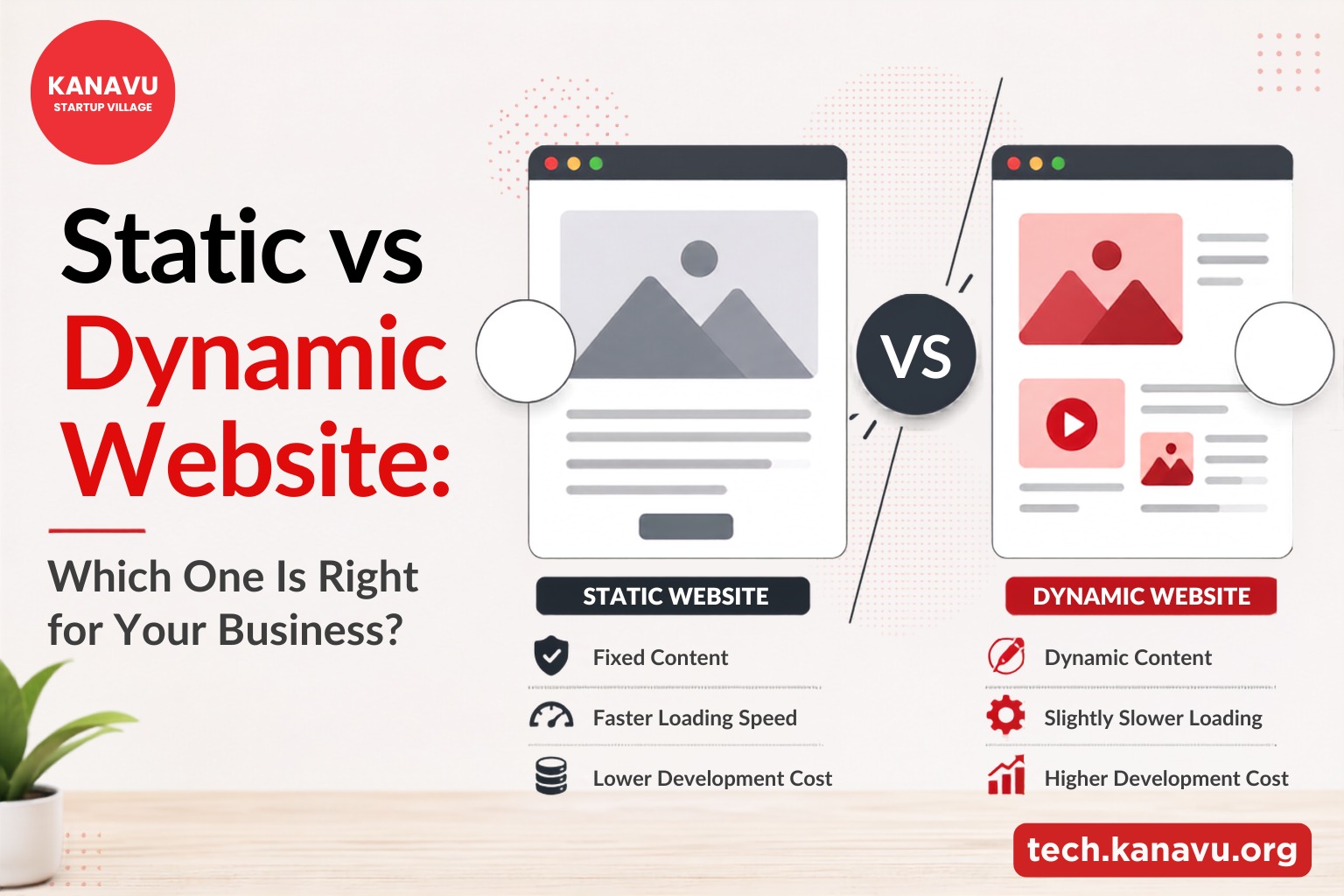
Every business needs a website today. But not every business needs the same kind of website. When you start building one the first real decision you face is this. Static vs dynamic website. Which one do you actually need and why does it matter for your business specifically?
Before deciding between a static and dynamic website, it helps to understand the complete website planning process. Our guide on How to Create a Business Website in 2026? which explains everything from choosing the right platform to planning your website for long-term business growth.
What Is a Static Website?
A static website delivers the same content to every visitor every time. The pages are pre-built and stored as fixed HTML files. There is no database, no server side processing, and no content that changes based on who is visiting.
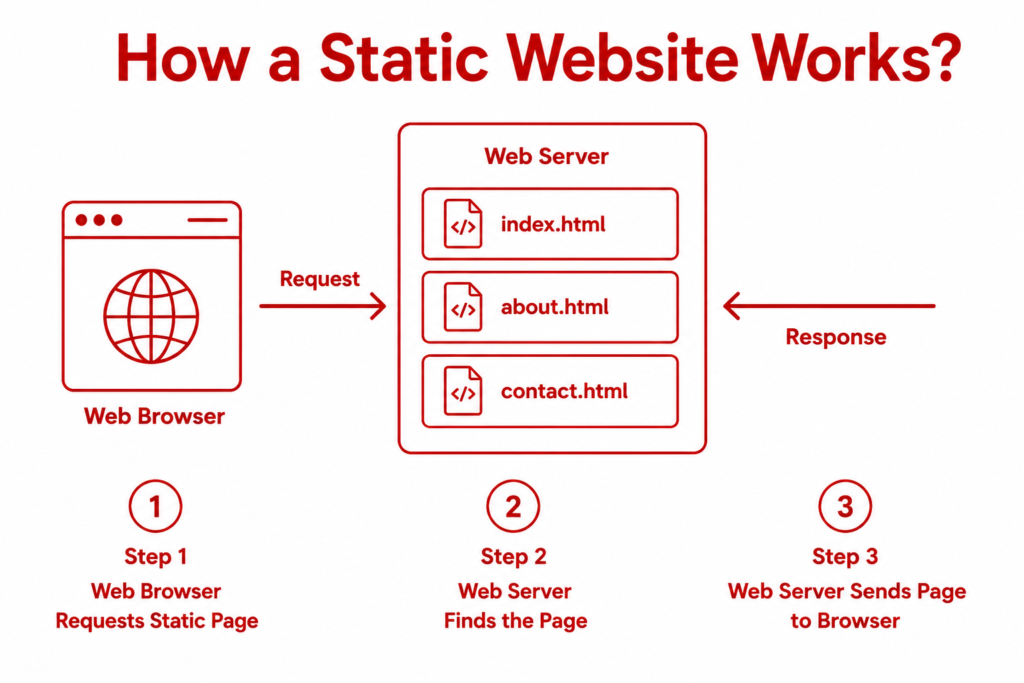
Advantages of a Static Website
- Loads faster because there is no server processing
- More secure because there is no database to hack
- Cheaper to host and maintain
- Easier to build for simple requirements
Disadvantages of a Static Website
- Difficult to update without technical knowledge
- Cannot personalise content for different users
- Not suitable for large websites with frequent changes
- No user login, cart, or interactive features
What Is a Dynamic Website?
A dynamic website pulls content from a database and builds each page in real time when a user visits. The content can change based on who is visiting, what they searched for, or what they clicked last time.
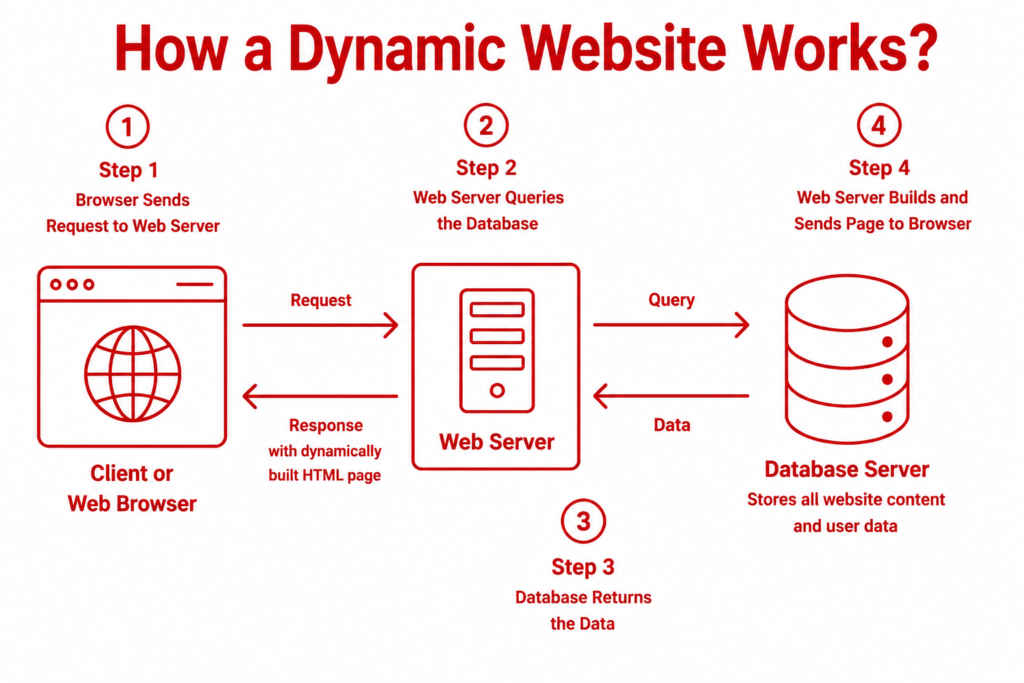
Advantages of a Dynamic Website
- Content can be updated easily without touching code
- Supports user accounts, login, and personalisation
- Scales easily as your business grows
- Perfect for large websites with hundreds of pages
Disadvantages of a Dynamic Website
- Slower load time if not optimised properly
- Higher cost for development and hosting
- More complex to build and maintain
- Security vulnerabilities if not regularly updated
Types of Websites by Purpose
- Business Website
- Portfolio Website
- E-commerce Website
- Blog Website
- Educational Website
- Landing Page
Choosing the right website type is only one part of the process. A successful website also requires proper planning, design, development, testing, and launch. Our Business Website Development Guide From Planning to Launch walks you through each stage to help you build a website that supports your business goals.
How to Choose Between Static vs Dynamic Website?
Choose a static website if:
- Your business information rarely changes
- You have a tight budget
- You need a fast loading simple website
- You do not need user accounts or e-commerce
Choose a dynamic website if:
- You sell products or services online
- You update content frequently
- You need user login and personalisation
- You plan to scale your website as your business grows
Which website is best for business?
Both static and dynamic websites can rank well on Google. Static websites load faster. Dynamic websites generate more content. The key is not the type you choose but how well it is built and maintained.
Not Sure Which One Fits Your Business?
Choosing between a static vs dynamic website can be confusing. Kanavu Technologies builds both static and dynamic websites using modern technologies like React, Next.js, and Flutter.
Whether you need a fast business website or a feature-rich platform with logins and e-commerce, they help you choose the right solution from the start.