Imagine giving an AI a complex coding project, hundreds of technical documents and several connected tasks. Could it understand everything and help complete the work?
That’s the challenge Google’s latest frontier model aims to address.
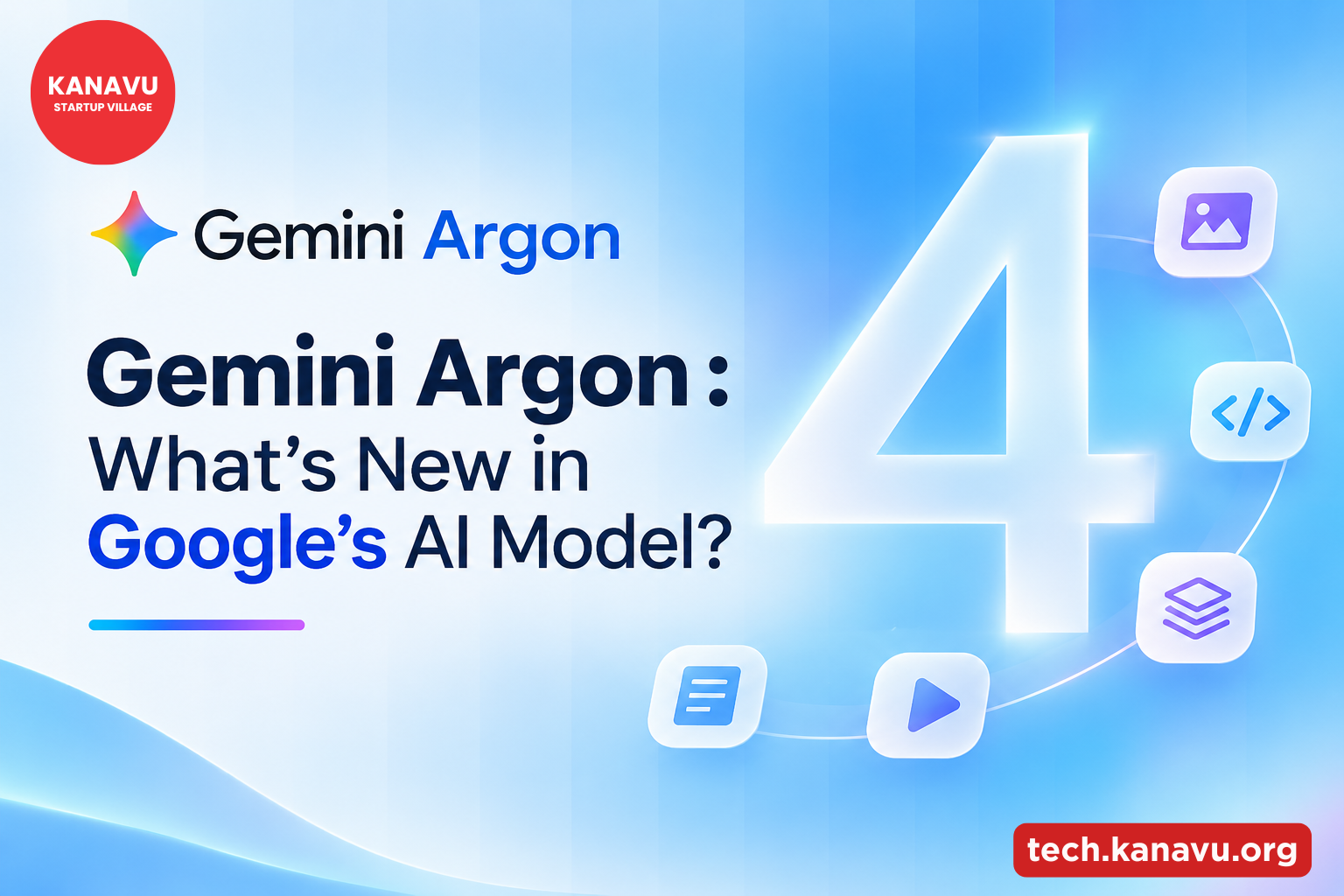
Gemini Argon, officially called Gemini 4 Argon, was announced on September 30, 2026, with broader access beginning October 13.
Designed for complex reasoning, software engineering and research, it represents Google’s latest step toward AI that can handle longer, more demanding workflows.
What Makes Gemini Argon Different?
Unlike AI tools mainly used for quick answers, Gemini Argon focuses on problems that require deeper analysis and multiple connected steps.
- Advanced reasoning: Tackling complex coding, mathematical and analytical problems.
- Long-context processing: Working with extensive documents and large codebases.
- Agentic workflows: Using tools to support tasks involving several steps.
These developments are part of a wider shift in artificial intelligence and automation. Explore Emerging Technology Trends You Need to Know for the Future to understand how Agentic AI, intelligent robotics and other innovations are shaping modern industries.
What Are the Key Features of Gemini Argon?

1. Long Context AI Processing
The model supports a unified token limit of approximately one million tokens, shared across input and output.
This allows developers to work with extensive documentation, software files and detailed instructions within supported limits.
2. Advanced Coding and Reasoning
Among Frontier AI Reasoning Models, Argon is designed for demanding tasks such as code analysis, debugging and software migrations.
Its capabilities can help engineering teams investigate problems that require several connected decisions.
3. Autonomous Agent Workflows
Argon supports tool-based workflows where AI can assist with research, coding and other multistep activities.
However, important actions should remain subject to suitable permissions, testing and human review.
Where Can Businesses Use Gemini Argon?
The model’s capabilities have applications across several industries.
| Industry | Potential Application |
|---|---|
| Software Development | Code analysis and debugging |
| Finance | Complex report analysis |
| Legal Services | Document research and review |
| Enterprise Operations | Workflow assistance |
| Cybersecurity | Defensive code analysis |
Google has also reported improvements across several Developer AI Benchmarks, although benchmark results should not be treated as guarantees of real-world accuracy.
How Can Developers Access Gemini Argon?
Developers can explore Argon through supported paid Gemini API access and Google AI Studio.
The model is also available through selected Gemini products, with access depending on the platform and subscription.
Read Google’s official Gemini 4 Argon announcement for details.
Explore Modern Technology with Kanavu Technologies
New AI models create opportunities, but choosing the right technology still matters.
At Kanavu Technologies, we develop websites, mobile applications and ERP solutions based on business requirements.
Our approach focuses on understanding the problem, selecting suitable technologies and creating practical software solutions.
FAQs
1. What is Gemini Argon used for?
Gemini Argon is designed for complex tasks involving software development, research, document analysis and multistep reasoning.
2. Does Gemini Argon support a one-million-token context?
Yes. Gemini 4 Argon supports a unified limit of 1,048,576 tokens, shared across supported input and output processing, rather than a separate one-million-token input allowance.
3. Is Gemini Argon available to developers?
Yes. Google made Gemini 4 Argon available through paid Gemini API access on October 13, 2026. Availability and usage limits depend on the selected platform