
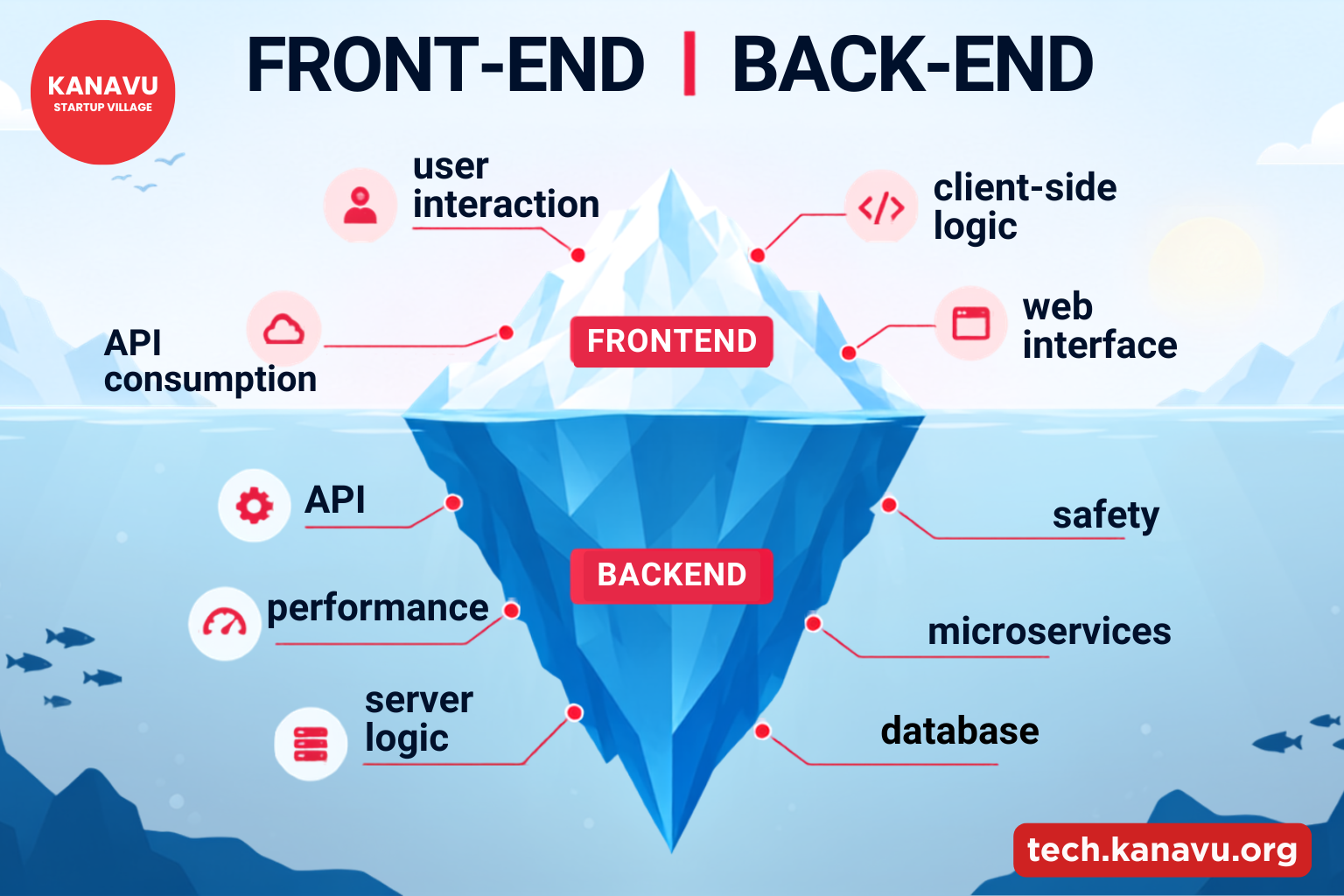
Building a website or web application involves two major sides: frontend and backend development. One shapes what customers see and use, while the other powers the functions working behind the scenes.
But if you’re starting a new business project, which should come first?
The answer depends on what you need to validate, build, and deliver.
IN SIMPLE TERMS
Frontend = What users see and interact with
Backend = What makes the application work behind the scenes
What Is Frontend Development?
Frontend development focuses on the visible part of a website or application. It includes the layout, buttons, forms, navigation, animations, and other elements users interact with.
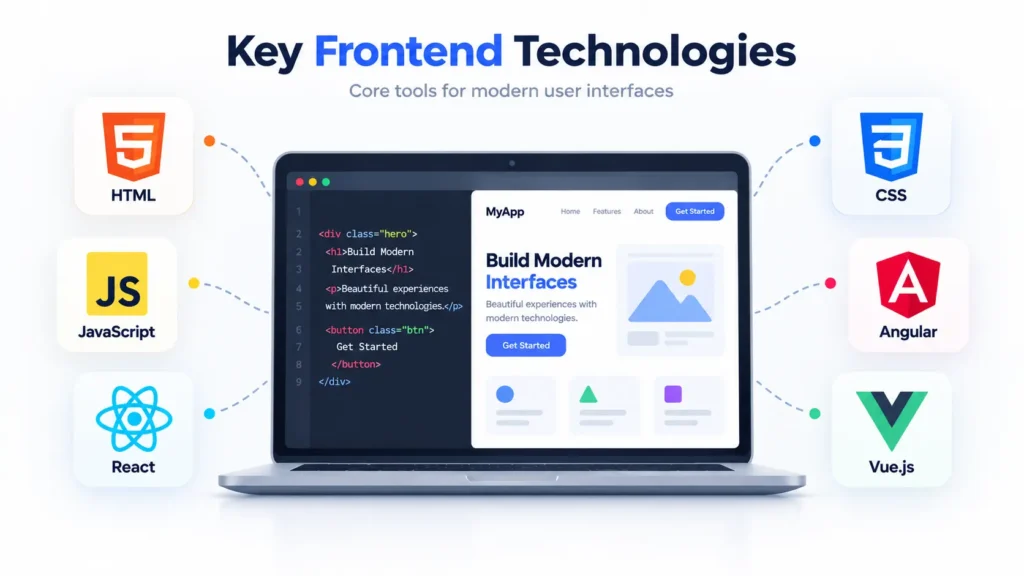
Key Technologies
- HTML for page structure
- CSS for styling and layouts
- JavaScript for interactivity
- React, Angular, and Vue.js for building modern interfaces
A frontend developer also considers mobile responsiveness, browser compatibility, page speed, and user experience. These are among the essential features of a business website that help create a smooth experience for customers.
What Is Backend Development?
Backend development handles the server-side operations that users don’t directly see. It manages application logic, databases, authentication, APIs, and data processing.
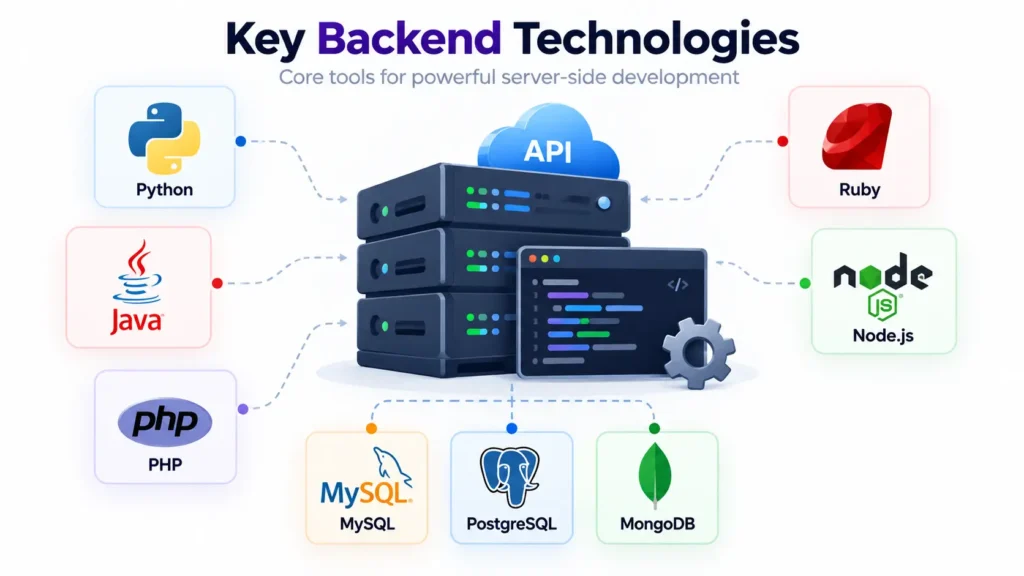
Common Technologies
- Python
- Java
- PHP
- Ruby
- Node.js
- MySQL, PostgreSQL, and MongoDB
Which Should Your Business Build First?
There is no universal rule. Your business goal and product type should guide the decision.
Choose Frontend First If :
- You want to test a product idea quickly
- Visual design is important to your brand
- You need a clickable prototype
- You want early feedback from customers or investors
- Your first version has limited backend requirements
Choose Backend First If:
- Your product depends heavily on data
- Security is a major concern
- Complex calculations or processing are required
- You are building an API-first product
- The core functionality matters more than the initial interface
For example, a data-heavy platform may need its database, APIs, and business logic planned before the complete interface is developed.
Do You Need Both?
For most functional websites and applications, frontend and backend development eventually work together.
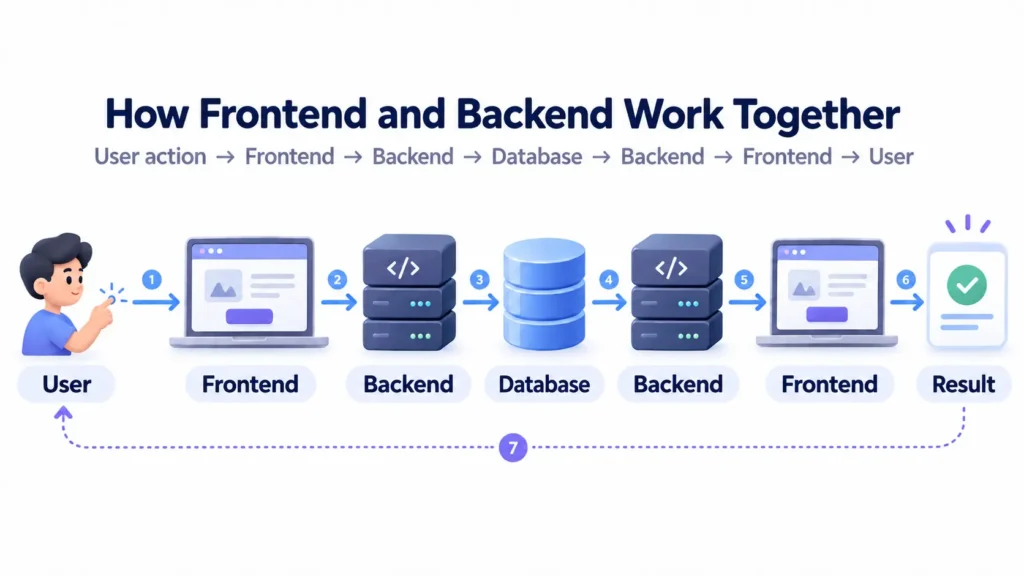
A customer may click a button on the frontend, but the backend could be responsible for processing the request, checking the database, and returning the result.
HOW THEY WORK TOGETHER
User action → Frontend → Backend → Database → Backend → Frontend → User
A Smart Approach for Businesses
Choose your starting point based on your business goal. A frontend prototype can help test design and user feedback, while backend planning is important for data-heavy or complex applications.
Start with the part that helps you validate your biggest business risk, then build the other side around it.
Even after development, websites may face performance, design, or functionality issues. Explore our Website Problems and Fixes guide to understand common challenges and how to address them.
Frequently Asked Questions
Frontend development focuses on the visible parts of a website, while backend development manages server-side logic, databases, APIs, and data processing.
It depends on the project. A frontend prototype may come first when design and customer feedback are important. Backend planning may come first for data-heavy or complex applications.
Full-stack development combines frontend and backend development. A full-stack developer works on the user interface as well as the server-side systems.