

Modern websites must be fast, easy to use, and work smoothly on mobiles and computers. At Kanavu Startup Village, platforms like Kanavu Run, Kanavu Help, and Kanavu School are created using a clear and practical web development process that combines planning, design, coding, and regular maintenance. To explore more about Kanavu’s digital work and services, visitors can learn directly through Kanavu.org, which showcases the startup’s platforms and ongoing projects. Understanding the Website Requirements Before starting any project, the Kanavu team clearly understands what the website needs to do. They focus on: This step builds a strong base for the full web development process. How Modern Websites Are Built: Inside Kanavu Startup’s Web Development Process Designing Simple and Clean Layouts The design team works to keep websites easy and comfortable for users. Main design focus includes: Good design improves user experience and supports the web development process. Anyone curious to see how these designs come to life can visit Kanavu.org to view real digital platforms developed by the team. Developing with Real Technologies Kanavu Startup uses both modern tools and proven technologies to build websites. Common technologies used are: These tools help create flexible websites like Kanavu Help for community work and Kanavu School for learning platforms. This stage is the heart of the web development process. Testing and Continuous Updates Before launch, every website goes through proper testing. The team checks: After launch, regular updates and security checks are done to keep everything running smoothly. This keeps the web development process reliable. Managing Kanavu Platforms and Client Projects Along with internal platforms, Kanavu Startup Village also handles many client websites. They provide: Those interested in digital services, startup initiatives, or community platforms can explore more through Kanavu.org, where Kanavu shares its digital journey and projects. Why Kanavu’s Web Development Stands Out Kanavu Startup Village focuses on: This practical approach helps both communities and businesses grow online.

How SEO and Digital Marketing Help Kanavu Startup Expand Its Online Reach
In today’s digital world, most people find services and information through Google. For Kanavu Startup, SEO and digital marketing play a big role in helping its digital page, Kanavu Help page, and Kanavu School page reach more people online. These strategies help improve visibility, attract visitors, and build trust over time. How SEO Works for the Kanavu Digital Page The Kanavu digital page focuses on technology, digital services, and innovation. SEO helps Google clearly understand what this page offers so it can show it to the right audience,following best practices outlined in Smart Digital Marketing Tips for Local Startups. Main SEO actions used: With these steps, the digital page slowly moves higher in Google search results, showing the power of SEO and digital marketing. How SEO Helps the Kanavu Help Page Rank Better The Kanavu Help page connects people to community support and social initiatives. SEO helps this page appear when users search for help-related topics. Important SEO practices include: These steps help Google trust the page and rank it higher, which increases organic traffic through SEO and digital marketing. How Blogs Improve the Kanavu School Page Visibility The Kanavu School page uses blogs to attract visitors searching for learning and skill-based topics. SEO helps these blogs rank for specific long-tail keywords. Some useful methods are: This regular content helps Google recognize the page as active and useful, boosting reach through SEO and digital marketing. How Rankings Are Tracked and Improved Kanavu Startup can track SEO performance using tools like Google Analytics and Google Search Console. These tools show what is working and what needs improvement,aligning with future-ready practices discussed in Generative Engine Optimization Strategies. They usually check: By improving weak areas, the site continues to grow stronger with SEO and digital marketing. Why This Strategy Helps Kanavu Startup Grow Instead of depending only on paid ads, Kanavu Startup uses organic methods to grow online presence. Good SEO builds long-term traffic and trust. Main benefits include: This is why SEO and digital marketing are important tools in Kanavu Startup’s digital growth journey.
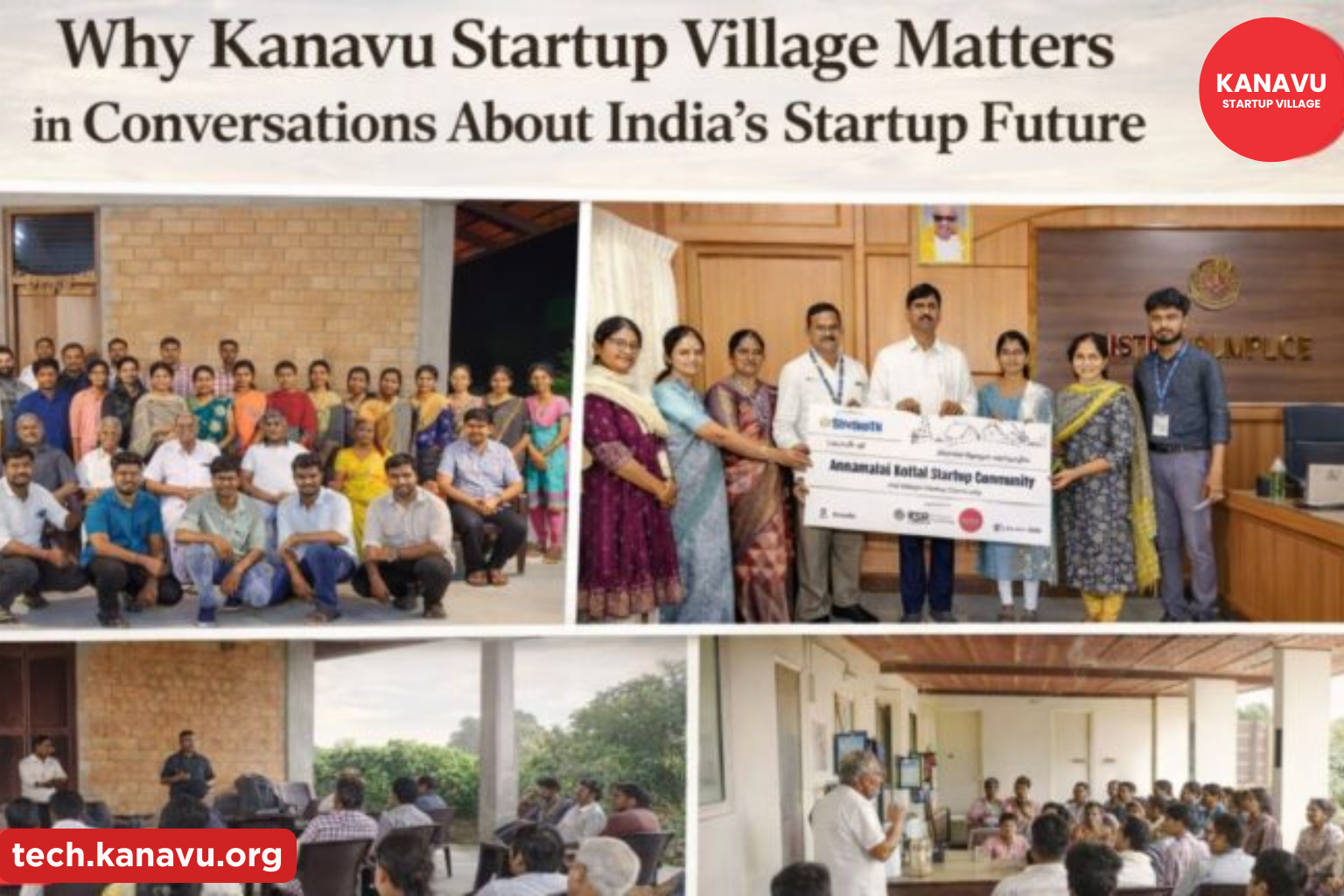
Why Kanavu Startup Village Matters in Conversations About India’s Startup Future
When people talk about India’s startup future, the focus often falls on big cities like Bangalore, Mumbai, and Delhi — places with venture capital, unicorns, and large tech campuses. Startups rooted in rural heartlands could drive the most meaningful change in India’s startup future, not just those in big metros. That’s where Kanavu Startup Village (KSV) plays a unique and important role. A Hub for Rural Entrepreneurship and Innovation Kanavu Startup Village, located in Annamalaikottai, Sivagiri, Erode, Tamil Nadu, is an innovation hub designed to nurture and support entrepreneurs and startups from underrepresented areas. Its core mission is to bridge the rural tech gap by providing resources, mentorship, and hands-on support that many rural innovators otherwise lack. Unlike many urban accelerators, KSV focuses on empowering local talent and rural professionals to think big, build solutions, and participate in the larger startup ecosystem of India — a critical piece of making urban and rural India thrive together in India’s startup future. Access to Real Startup Support, Not Just Space Kanavu Startup Village does more than provide office desks. It actively supports entrepreneurs with a range of practical resources: This means early-stage founders in rural India can receive structured help — from prototyping products to planning market entry — without relocating to a big city. That model of decentralization is central to the long-term conversation about India’s startup future. Partnering With Broader Ecosystems KSV doesn’t work in isolation. It is part of wider initiatives that aim to support rural entrepreneurship. For example, the Gramam Thorum Puthozhil program — a collaborative initiative between StartupTN (Tamil Nadu Startup & Innovation Mission) and organizations like KSV — helps rural entrepreneurs gain access to incubation, mentoring, and government startup schemes. Such partnerships show how rural startup ecosystems are being taken seriously by state-level innovation missions, further expanding the role of hubs like Kanavu in shaping India’s startup future. A Launchpad for Local Talent and Small Town Founders Many innovators from Erode district and nearby regions have benefitted from the ecosystem at Kanavu Startup Village. By offering co-working zones, expert guidance, and connection opportunities, KSV helps local founders get visibility and confidence — two things that are often lacking in rural entrepreneurial journeys,highlighting Startup Opportunities for Youth in Non-Metro Regions. Additionally, collaborations with companies like Hiviun and Nativer setting up operations at KSV show that even established startups and technology teams find value in the rural ecosystem Kanavu is building. Rethinking India’s Startup Future India’s startup future depends not only on unicorns and big-ticket funding. It also depends on how well the ecosystem supports: Kanavu Startup Village’s work highlights that innovation can flourish everywhere in India, not just in big cities. When rural innovators are given the right tools, guidance, and community support, they contribute uniquely to India’s startup future — creating jobs, solving local problems, and inspiring new generations of founders.
How Kanavu Digital Uses Technology to Support Inclusive Community Development
Kanavu Digital (often referenced as DigitalVillage.In under the Kanavu.org network) is a technology-driven initiative that doesn’t just build digital products — it uses technology strategically as a tool for Inclusive Community Development. Unlike many technology services that focus solely on business or branding, Kanavu Digital emphasizes community impact, empowerment, and creating access for underrepresented groups. Kanavu Digital: A Technology Platform with Purpose Kanavu Digital was established to help a variety of organisations — from startups to community projects — leverage modern technologies like AI, Machine Learning, Big Data, and digital communication tools. The aim is not just technical advancement, but broadening access to digital resources across sectors. At its core, the initiative supports inclusive community development by: This reflects a shift from technology as a standalone tool to technology as a community enabler. Building Bridges Through Digital Strategies Kanavu Digital provides services and strategic direction aimed at helping organisations be more visible, accessible, and impactful. These services typically include: By combining these technologies with community goals, Kanavu Digital strengthens both local outreach and broader impact. Inclusive Community Development Through Tech Outreach Rather than offering technology as a product alone, Kanavu Digital focuses on inclusion and participation. This means its tech work prioritises: This kind of work supports Inclusive Community Development by making technology an ally for community goals rather than a barrier. Real Applications of Technology in Community Contexts In practice, Kanavu Digital has helped organisations: These efforts help organisations — from small local initiatives to growth-oriented startups — participate in the digital economy in meaningful ways. Tech and the Broader Kanavu Ecosystem Kanavu Digital is part of the broader Kanavu.org mission, which includes entrepreneurial support, education, and community engagement. Together with initiatives like Kanavu Startup Village and Kanavu Help, the digital arm strengthens the ecosystem by enabling others to scale their impact through technology. By making digital tools and strategies accessible, Kanavu Digital plays a core role in shaping technology that supports Inclusive Community Development, connecting rural voices with national and global platforms.
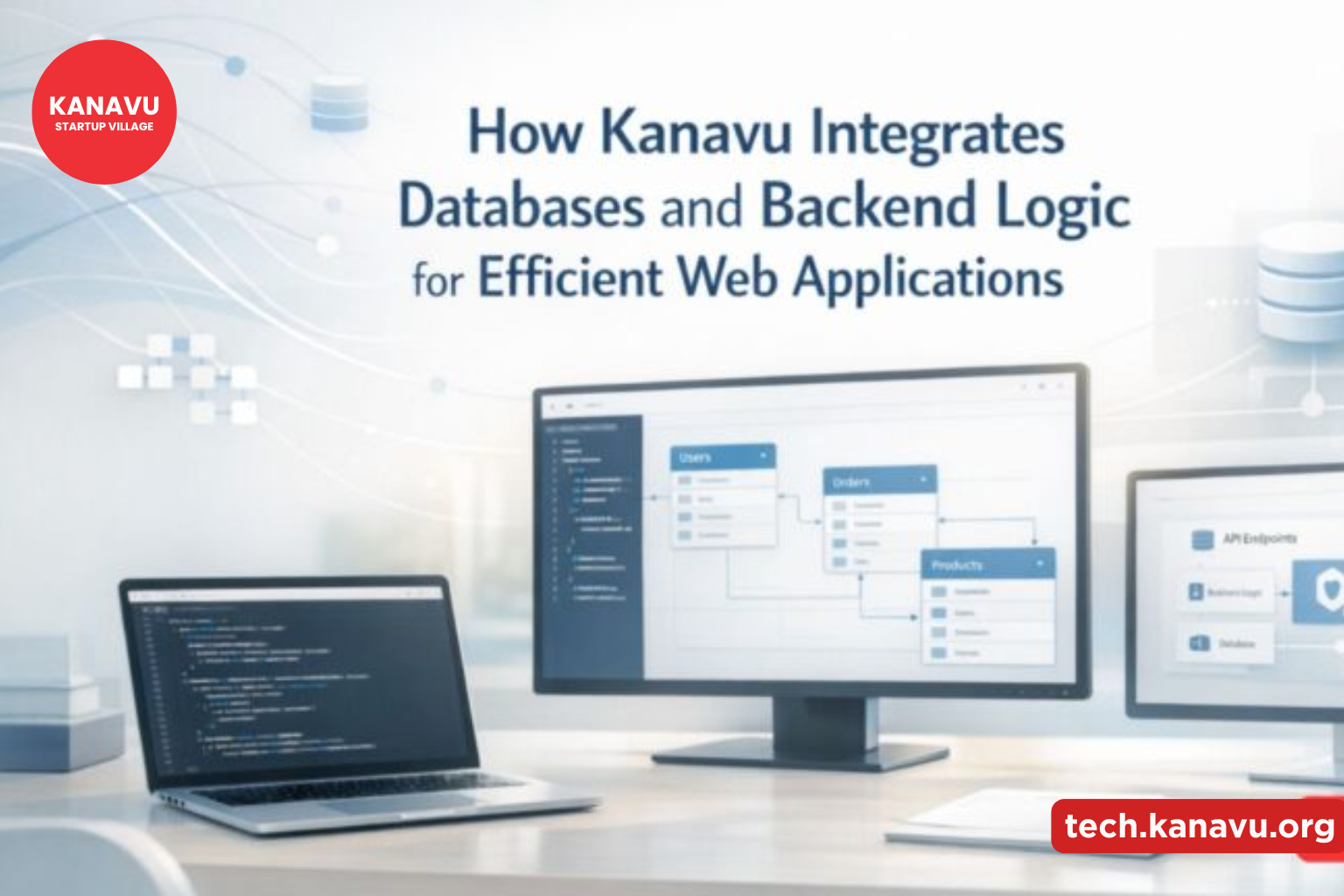
How Kanavu Integrates Databases and Backend Logic for Efficient Web Applications
At Kanavu, building digital platforms is not about quick demos or surface-level features. The focus is always on creating Efficient Web Applications that can handle real usage, real data, and real-world constraints. Every project starts with understanding how information flows, how systems respond, and how databases and backend logic work together smoothly.This backend-first mindset reflects Kanavu’s Web Development Strategies for Idea to Web Product, ensuring each stage is planned with long-term performance in mind. Kanavu follows a practical, tested approach where backend decisions are made early, not as an afterthought. Backend-First Thinking at Kanavu Before any interface is finalized, Kanavu plans the backend structure carefully. This ensures the application remains stable even as usage grows. Key backend principles followed: This approach helps Kanavu deliver Efficient Web Applications that are predictable and easy to maintain. Database Design That Reflects Real Usage Kanavu primarily works with relational databases like MySQL, focusing on clarity and performance rather than complexity. Database practices include: Instead of overloading the database with unnecessary joins or logic, Kanavu keeps queries clean and optimized. This directly contributes to building Efficient Web Applications that respond quickly and scale steadily. Backend Logic That Connects Everything The backend acts as the brain of the application. At Kanavu, backend logic is written to be readable, modular, and reusable. Typical backend responsibilities include: By keeping backend logic structured and modular, Kanavu avoids performance bottlenecks and ensures Efficient Web Applications across different use cases. How Kanavu Ensures Smooth Frontend–Backend Communication Kanavu relies on structured data exchange using JSON and APEX-based APIs. This allows frontend components built with HTML, CSS, and JavaScript to interact seamlessly with backend services. The benefits: This tight integration plays a major role in delivering Efficient Web Applications that feel responsive and reliable,clearly demonstrating Why User Experience Design Drives Startup Success in real-world digital products. Security and Performance as Core Requirements Efficiency is not just about speed—it also includes safety and consistency. Kanavu implements: These measures ensure that applications remain secure without compromising efficiency. Why This Integration Matters When databases and backend logic are thoughtfully integrated, applications: This is how Kanavu consistently delivers Efficient Web Applications built for long-term use, not short-term display.
From Idea to Web Product: Web Development at Kanavu Startup Village
At Kanavu Startup Village, web development does not happen in a perfect or corporate-style way. Most projects start with confusion, limited clarity, and basic resources. Ideas change while building, features are added or removed midway, and learning happens along the way. Because of this, the focus is on practical and flexible Web Development Strategies rather than complex plans as followed in real projects shared through the Kanavu Startup Village How Ideas Actually Begin Ideas usually start from real problems shared by our founders or clients. Often, the idea is rough and not clearly defined. Teams first try to understand: Instead of waiting for perfection, work begins early. This helps shape realistic Web Development Strategies from day one. Planning with Real-World Limitations Planning is done based on what can realistically be built. The focus is on functionality, not heavy design. Planning usually includes: Complex features are postponed. This keeps development practical and aligned with achievable Web Development Strategies. Full-Stack Web Development in Daily Practice Web development work follows a simple full-stack approach. The commonly used stack includes: Development happens in small steps. Code is written, tested, changed, and rewritten many times. This trial-and-error approach is a natural part of real Web Development Strategies used at Kanavu Startup Village. How Client Interaction and Satisfaction Are Handled Client interaction is direct and honest. There are no complicated processes. Clients usually explain their needs in simple language, and requirements often change during development. The team: Instead of promising everything, realistic timelines and features are discussed. Keeping communication clear helps maintain trust and supports effective Web Development Strategies,similar to principles shared in Social Media & Digital Marketing Tips for Local Startups. Testing, Fixing, and Deploying in Reality Testing is mostly manual and done by the team itself as part of practical Web Development Strategies This includes: Websites are usually deployed on shared hosting or simple servers. After deployment, bugs are fixed gradually, and features are improved based on actual usage.
Sustainable Digital Marketing Practices Gaining Momentum in 2025
2025 is a big leap towards sustainability in marketing. Brands no longer just think just about profit, but also the planet. Online marketing is becoming greener, wiser, and more human-driven. The Age of Sustainable Marketing The internet can be harmless-looking, but each click, ad, and video consumes energy. Servers and data centres generate a lot of carbon footprint. As more people realize this, users and companies alike wish to cut down digital wastage. Sustainable marketing achieves that. It emphasizes long-term value over short-term reach. It also establishes genuine trust by being caring about people and the environment. Consumers today appreciate brands that do what they say, not merely say it. Smarter Use of Data and Energy In 2025, brands handle data more intelligently. They only take what they require, reducing energy consumption and enhancing privacy. Clean data equals better insights with less waste. Most companies also employ green hosting using renewable energy. This minimizes carbon emissions from websites and online advertisements. Even tiny adjustments, such as decreasing image sizes or uninstalling unused plugins, save energy. Reduction of Digital Waste Digital clutter wastes power and attention. Overwhelming inboxes or spamming with nonstop ads is no longer an effective method. Brands are opting for quality over quantity. They upload fewer but more meaningful, relevant content. Content recycling is another genius step. Rather than repeating the effort of creating new stuff all the time, marketers recycle old blogs, videos, and graphics. This saves time, money, and resources and still keeps the audience interested. Building Trust Through Honest Content Sustainability also equals honesty. Consumers desire brands that share authentic stories about what they do. More companies in 2025 are demonstrating how they minimize waste, uphold fair labor, and safeguard privacy. Sustainable digital marketing is not a fleeting trend. It’s a wiser, cleaner path to growth. As technology and consciousness increase, the brands that move quickly will set the pace—with less waste, more confidence, and a healthier future for everyone.
The Future of SEO in the era of AI search engines
Search is evolving at lightning speed, driven by artificial intelligence and the growing demand for personalized answers. SEO in the era of AI is not just about ranking on the first page—it’s about being discovered in a world where algorithms understand context, predict intent, and deliver results almost instantly. Businesses that fail to adapt risk invisibility, while those who embrace change can unlock unprecedented opportunities for growth and visibility. How AI is transforming search behavior AI-powered search engines no longer depend entirely on keywords. Instead, they interpret meaning, analyze behavior, and deliver results that align with user intent. For example, when someone searches for “best laptop for students,” AI doesn’t just show a list of laptops. It considers price, performance, reviews, and even the tone of the query before generating a tailored response. This transformation benefits users by reducing the need to scan multiple websites for information. For businesses, however, it means the old tricks of keyword stuffing and link spamming no longer work. Today’s content must provide genuine value, context, and clarity. SEO in the Era of AI: New rules for digital visibility SEO in the era of AI introduces a fresh set of rules that go far beyond traditional tactics. Instead of focusing exclusively on keywords and backlinks, companies must prioritize human-centered experiences. Google’s algorithms increasingly reward quality, relevance, and usability. Some new rules shaping visibility include: Intent-based content: Create content that directly answers questions instead of repeating keywords. User experience first: Fast-loading, mobile-optimized websites with intuitive navigation perform better. Structured data: Schema markup helps AI systems categorize and display content more effectively. Authority and trust: Search engines now evaluate expertise, reliability, and author credibility before ranking. Adapting to these rules ensures businesses remain relevant in AI-driven search environments. Why human creativity still matters Even in an age dominated by machines, people connect with authenticity. AI can analyze data, but it cannot replicate emotion, empathy, or lived experience. This is where human creativity becomes invaluable. Content that blends useful insights with engaging storytelling resonates far more than text optimized only for algorithms. Practical ways to maintain authenticity include: Sharing case studies or real-life examples Writing in a conversational, relatable tone Using narratives to make complex topics easier to understand Building transparency into your messaging to establish trust When creativity and data-driven optimization meet, the result is powerful content that ranks well and builds long-term relationships with audiences. Opportunities in AI-driven SEO The rise of AI in search is not just a challenge—it’s a game-changing opportunity for forward-thinking businesses. Those who adapt early will gain a competitive edge as user expectations evolve. Some of the biggest opportunities include: Personalization: AI tailors results to user preferences. Businesses that deliver personalized recommendations or content will stand out. Conversational optimization: With the growth of voice assistants, natural language queries are more common. Optimizing for conversational search ensures higher visibility. Content clusters: Interlinking related content pieces establishes topical authority and signals expertise to AI. Predictive insights: Businesses can leverage AI-powered analytics tools to anticipate consumer needs and trends. These opportunities highlight how SEO is shifting from a purely technical discipline to a blend of creativity, strategy, and technology. Adapting for long-term success SEO in the era of AI is about balance—leveraging AI’s analytical power while keeping the human voice at the forefront. Brands that embrace agility will thrive, while those clinging to outdated strategies will struggle. Steps for long-term adaptation include: Regularly updating existing content to stay relevant Using multimedia formats like video, infographics, and podcasts to enrich engagement Tracking performance with AI-powered SEO tools for real-time adjustments Continuously experimenting with tone, structure, and storytelling to stay ahead of trends This adaptive mindset ensures businesses remain competitive as search technology continues to advance. Shaping tomorrow’s SEO strategies The world of SEO is entering its most transformative phase yet. AI-driven search engines are redefining what it means to be visible, shifting the focus from keyword tricks to meaningful, user-first experiences. Yet, despite the technological advancements, the human touch remains irreplaceable. SEO in the era of AI is about creating content that answers questions, builds trust, and connects emotionally while also satisfying algorithms. Businesses that adapt their strategies now by blending AI insights with genuine storytelling will not only secure visibility but also build stronger, lasting relationships with their audiences. Those who ignore this evolution may find themselves left behind in the digital shadows.

Social Media Marketing on a Shoestring: 5 Hacks That Cost Almost Nothing
Social Media Marketing -For many small businesses, marketing budgets are getting lower. The need hardly keeps up with these budgets, but still, the online visibility requirement is stronger than ever before. You might be thinking that doing a big impact requires you to have a big budget; actually, it’s quite the opposite. The right few moves can get your brand the attention it deserves with little or no cash out of your pocket. The power of social media marketing can still be strong even on a limited budget and this write-up will give you a brief outline of five hacks, which you can start using, and which will be nearly free. 1. Free content tools are at your disposal if you want to make eye-catching posts There’s no need to have a professional design team if you want to have the posts look good. Just the likes of Canva, Crello, or Adobe will be enough for you to generate attractive graphics for free. The idea here is that you get to use the platforms’ pre-made models, be it for a Instagram post, a Facebook banner, or even an infographic of LinkedIn, and with a little effort, you can alter these templates to fit your branding style. Most people get attracted first to what they see regardless of how quickly their attention span is; this is where good visuals come in to get your platform visitors’ attention fast and thus, your message/intended profile will not get lost in the overcrowded feed. 2. Get the Most from User-Generated Content People are more willing to believe what other people say rather than the brands themselves. Ask your supporters to share pictures, write reviews, or tell short stories about your products or services. Sharing content originally produced by users is a way for you to get the audience’s trust and save some of your precious time. This is by far one of the cheapest methods to maintain an active feed. Help creating an uncomplicated business tagline so consumers could tag your name to their posts. With time, it appears as a continuous resource of free content that promotes the brand far more naturally than ads do. 3. Publish Useful Micro Content Within social media marketing, it is proven repeatedly that consistency is king over perfect execution. The long videos or overwhelming campaigns are not always required from you. Micro-content such as tips, short “how-to” clips, or one-liner posts can be very helpful to target groups. E.g., bakeries could upload a 20-second reel showing the decoration of cupcakes, and health instructors could give a quick workout tip. Micro-articles become easier, cheaper, and faster for people to consume and share. 4. Free scheduling tools are at your disposal Time is a valuable resource just like money. Although daily posting can be stressful, there are free scheduling tools like Buffer, Hootsuite (basic plan), and Meta’s built-in Business Suite that are helpful. With them, a week’s worth of content can be planned in one go. Scheduling enables not only the saving of time but also the continuity of postings which is vital in the building of trust. Many small businesses give up because they cannot cope with the need for constant posting. Scheduling tools fix the problem in a very cost-efficient way. 5. Try to Create Relationships instead of Only Posting Participating is free and, unfortunately, businesses tend to overlook it. Make friendly and positive comments, subscribe to groups that are relevant to your business, and engage with other people’s posts that are in the same field as you. Instead of calling out at the top of your lungs in the empty void, imagine social media as a chat. Even ten thought-provoking comments per day can lead to more followers plus potential customers on your site. People remember a brand that engages. This free, simple, and frequent activity may place your business a step higher among competitors who are only focused on the distribution of content. Why These Hacks Matter The main reason why these hacks are very practical is that they put a major focus on human contact, using one’s creative skills, and taking intelligent advantage of free tools. You don’t need to spend more than those big companies that have rich marketing budgets. What you require is to be more knowledgeable and creative than them. With every post you make, comment, or share, you add to your brand’s voice. By being steady, sincere, and innovative, you will be able to build the long term without tanking your wallet. Don’t forget, social media marketing is less about spending a hefty amount and more about having more meaningful connections.

GTmetrix Speed Test – How To Run It?
Introduction – What is GTmetrix All of you are eager to learn how the GTmetrix speed test works, and I’m aware of that. But before we get to the main picture, let me explain what GTmetrix is. GTmetrix is a web performance analysis and monitoring tool that helps you test your website speed and discover optimization opportunities It is a very easy-to-use tool. It gives you a diagnosis of the loading speed of your website. Along with that, it also indicates how to solve the elements that slow it down It gives you a very detailled reports about the performance indicators. Using this, you can do the appropriate corrections. Thinking of upgrading your business? Learn why E-Commerce is absolutely necessary for your business. Here are some of the biggest factors to consider. NUMBER OF TESTS on GTmetrix Speed Test To get a really good comprehensive set of data, you need to do a whole lot of speed tests, preferably at different times throughout the day. The ideal would be to schedule an hourly test and leave it running for about a week or so. The reason for this is your website’s performance will change throughout the day, depending on your visitor count or even the usage of your server box if you’re on a shared host. The actual load speed given in seconds may change over the course of a day (or even weeks), some of the things GTmetrix can reveal — such as many of the recommendations it will yield on how to speed up your website won’t change with time at all. TEST LOCATIONS The proximity of your site to the test location (or a real human visitor) plays a big role in your test results. Because of that, the location you test your site from makes a big difference. In general, you want to pick a test location that’s as close as possible to your target visitors (which should also be close to the physical location of your hosting server). If your website only targets one location, all you really need to care about is the test results for that location. To be able to choose the location from which to test your site using GTMetrix, you’ll need to register for a free account. TEST DEVICES/CONNECTION SPEEDS GTmetrix speed test will let you test different connection speeds for free, but you’ll need to pay for a premium account if you want to test using a mobile device. Connection speed is another important consideration. Not all of your visitors will be using ultra-fast wired connections. For example, they could be browsing from their phone on 4G — that will also lead to slower page load times. If you want to get an accurate picture of how these visitors experience your site, it’s useful to experiment with different devices and connection speeds. How to Use and Understand the Basic GTmetrix Speed Test? When you register for a free GTmetrix account, you open up a ton of new configuration options that’ll help you to address the considerations we discussed above. Locations — Dallas (USA), Hong Kong (China), London (UK), Mumbai (India), Sydney (Australia), Sao Paulo (Brazil), Vancouver (Canada). Test devices — Chrome (Desktop) and Firefox (Desktop) for free. With a paid plan, you can also test Chrome on a Galaxy Nexus Android device. Connection speeds — various options from Broadband down to 56k (dial-up — remember those days?). Once you’ve created your free account, you can: Enter your site’s URL in the box. Click the Analysis Options accordion button to expand the extra options. To get an accurate picture of your site’s load times, you should make at least two choices: Select the location nearest to your target audience using the Test URL in drop-down. Select Broadband (Fast) in the connection drop-down. This will use a connection speed that’s around the average for the USA as a whole — you can choose a different connection speed if that fits your needs. The summary box contains five pieces of information: Fully Loaded Time — how long it takes your site to fully load (this is the most important number). Total Page Size — how large your site is. Smaller is better. Requests — how many HTTP requests your site requires. Fewer is better. PageSpeed Score — a quick approximation of how optimized your front-end site is based on Google PageSpeed. YSlow Score — a quick approximation of how optimized your front-end site is based on a different set of metrics from YSlow. Conclusion Website Content management tools are up and coming. Most businesses have adapted to the new era. We strongly suggest you give it a try. GTmetrix can be a huge asset to your business if used well. Well, if you’re looking for more – check out the list of E-Commerce tools your business must use Have a good day!