

The story behind our big-game ad campaign and the “big change” to Reese’s
When we have an exciting innovation, we want the world to know—and the faster, the better. That’s what drove our latest Reese’s ad campaign, produced by Erich & Kallman, that led up to the big game on February 11. Did you hear?” demands the voice of Will Arnett in each of the ads. “We’re making a big change to Reese’s Peanut Butter Cups.” When the characters hear the news, their reactions are over-the-top. Think: pleading emotional meltdowns, table tossing, beating-head-against-wall extreme, and yet, also so relatable. Wouldn’t you cycle through all the stages of grief upon learning that a product you adore—like one of the most beloved candies in America—may be changing? But what if you then learned that change was for the better? That Hershey is actually adding a layer of creamy caramel to the Reese’s you love to make Reese’s Caramel Big Cup, and classic Reese’s Peanut Butter Cups are still available? Celebration! Everybody dance! The strategy Being a part of this advertising journey was such a delight. It calls to mind the pain of having something taken away that you always thought would be there, only to realize that the product is still available—and then some. The ad that aired on Feb. 11 features seven characters—six humans and a dog—who each experience their own personalized emotional roller coaster. It’s chaotic, funny and turbulent, all at once. It’s something you could watch again and again to understand the depths of the pain and the elation that each character is feeling. And, at its heart, it’s an ad about fandom. People’s feelings about Reese’s are akin to how people feel about their favorite teams. If the logo changes, the colors switch and the stadium moves, lives are disrupted. Chaos ensues. The decision to air the ad during the football event of the year was an important one. In this streaming era, where viewers watch their favorite programs on various channels and platforms and according to their schedules, it’s hard to find moments of togetherness. Football’s favorite Sunday is practically an American holiday and a cherished cultural event. People tune in to the most-watched show of the year for their own reasons, whether it’s the game, the commercials, the half-time show or all of the above. Regardless of their motivations, they’ll all have highlights to talk about after the big game. We wanted Reese’s Caramel Big Cup to be a part of that Monday conversation, and we made sure that retail shelves were stocked and ready for all the consumers excited to try this new flavor combination. The story arc we built for the ad wasn’t limited to the 30-second Feb. 11 time slot. We created mysterious tea that played for a couple of weeks leading up to the big game, warning viewers that change is afoot but stopping short of the big reveal. We also enlisted influencers, like Jason Kelce, to share their reaction of sheer terror at the thought of a world without their beloved Reese’s. We have some other tricks up our sleeve with similarly themed ads to air in the future. The why You don’t take just any product to the big game. It’s been four years since we created our only other game day ad (in 2020, we advertised Reese’s Take 5), and it’s an enormous undertaking for us. But as we thought about the business strategy of how we get the most trial on a product that we feel is a great innovation, the big game became a very relevant tactic. While working on this campaign, I kept thinking about the thousands of people who have made Reese’s Caramel Big Cup a reality, including teams in research and development, innovation, supply chain, sales and retail. They’ve done a remarkable job. Now, it’s up to the rest of us to ensure that consumers know just how delicious this latest innovation is so they don’t miss an opportunity to fall in love with that orange wrapper again.

META enabling advertisers through its AI investments
Following a year focused on efficiency in 2023, Meta has declared artificial intelligence (AI) as its primary focus for 2024, with CEO Mark Zuckerberg announcing aggressive investments in technology that spans across all aspects of the company’s operations, including users, creators, businesses, and developers. During a recent earnings call, Zuckerberg highlighted that AI, particularly the generative type, contributed to a substantial 24% year-over-year growth in Meta’s advertising business in Q4, reaching a total of $38.7 billion. In a virtual roundtable on February 7, Meta executives elaborated on their AI plans, detailing what advertisers and agencies can anticipate this year, and shared success stories. Alvin Bowles, the Vice President of Meta’s global business group, emphasized that 2023 marked a significant turning point for the company, evident in the Q4 earnings that demonstrated Meta’s impact on advertisers using its tools. In addition to the growth in ad revenue, Meta experienced increases in users and watch time in the last quarter. Daily watch time across all video types grew by over 25% year-over-year, and users shared Reels 3.5 billion times per day. Bowles highlighted that Meta is currently in the midst of its AI journey, emphasizing that AI is not a recent addition but a fundamental aspect of Meta’s operations. He stated, “AI has significantly enhanced the performance of our ad system and is the driving force behind personalized content across all our apps. AI forms a foundational part of the experiences we offer to both individuals and businesses.” Meta’s multiyear investments in machine learning, automation, and AI within its ad products, designed to adapt to shifts in the digital ad industry, are yielding success for advertisers. Bowles emphasized the importance of Meta’s ability to gather feedback from hundreds of millions of users worldwide, a unique advantage owing to its massive global scale. He explained that this feedback has played a crucial role in rapidly improving Meta’s AI systems, particularly in areas like Reels and ads, where the company had to adjust to new regulations. Bowles concluded that as a result of strategic decisions made over the past few years, nearly all Meta advertisers are now utilizing AI tools for creating and targeting their ads.

Setback for Google’s cookie deprecation plans
Two industry watchdogs have expressed apprehension regarding Google’s shift away from third-party cookies in Chrome towards a Privacy Sandbox initiative that relies on alternative ad-targeting methods. Both the IAB Tech Lab and the U.K.’s Competition and Markets Authority (CMA) have issued separate reports, raising concerns about the potential disadvantages for other players in the digital advertising ecosystem. They foresee fresh challenges emerging in areas such as ad fraud and brand safety. The IAB Tech Lab, which has made its findings available for public comment, asserted that the industry is not adequately prepared for this change. It argued that the adjustments to Chrome do not yet provide a “viable business foundation.” On the regulatory front, the CMA emphasized that Google should not proceed with third-party cookie deprecation until concerns about anticompetitive issues related to Privacy Sandbox are addressed. Despite Google delaying the demise of cookies multiple times since announcing its intention in 2020, industry watchdogs are now expressing concerns about the viability of transitioning to Privacy Sandbox in its current state. The initial phase of Google’s plan to deprecate cookies is now underway, with cookies gradually fading away for a small percentage of Chrome users since January. The broader deprecation is planned for the second half of 2024. Privacy Sandbox is centered around two alternative ad-targeting solutions: a Topics API based on user interests and a Protected Audience API, formerly known as FLEDGE. The IAB Tech Lab, a nonprofit consortium focusing on developing best practices for digital advertising, outlined key issues with Privacy Sandbox. It highlighted potential disruptions to the programmatic ecosystem caused by the implementation of an ad exchange and ad server in Chrome, as well as the loss of crucial data points for ensuring brand safety. The IAB Tech Lab anticipates that ad-tech firms on the supply and demand side may face significant costs in adapting their systems to these changes, while brands, agencies, and publishers may encounter operational, financial, and legal challenges. The analysis by the IAB Tech Lab involved consulting with 65 companies across various practices over six months and mainly focused on the implications of the Protected Audience APIs, with some discussion on other topics like the Topics API. Anthony Katsur, CEO of IAB Tech Lab, emphasized that embracing Google’s Privacy Sandbox represents a seismic shift in the advertising landscape, and their findings highlight that the industry is not yet ready, identifying multiple challenges to implementation. The CMA, acting as an antitrust regulator, shares concerns about Privacy Sandbox potentially giving Google an advantage and creating obstacles for smaller players in digital advertising. The reliance on first-party data, the Topics API taxonomy ownership, and potential industry-run governance were all raised as issues by the CMA. Google and the CMA are currently in a standstill period as they work on the specifics of moving forward with Privacy Sandbox, with the CMA planning to publish its next report update on the matter in April.
Ramesh Juneja and the success story of Mankind pharma Ltd
1. In 1974, Ramesh Juneja held the position of a medical representative at Kee Pharma, a pharmaceutical company. While on a field visit, he was deeply moved witnessing someone resorting to selling jewelry to pay for medicines. This experience fueled his desire to make medicine more affordable. 2. After dedicating eight years to another pharmaceutical company, Lupin, Ramesh contemplated a change. He ventured into establishing an antibiotics company, Bestochem, which unfortunately faced failure by 1994. Undeterred, Ramesh, along with his brother, started a pharmaceutical company with an initial investment of Rs 50 lakh in their hometown, Meerut, UP, giving birth to Mankind pharma Ltd in 1995. 3. The concept was straightforward: offer cost-effective, innovation-driven, high-quality pharmaceutical products to enhance patients’ lives. The company’s tagline was “Serving Life.” Ramesh initially focused on selling affordable painkillers and antibiotics but was aware of the challenge. 4. To enhance brand recognition, he began labeling medicines under the name “Mankind Pharma,” concentrating heavily on smaller towns and rural areas. Within the first year, Mankind pharma Ltd achieved a revenue of 3.79 crore. 5. The growth continued with just 25 sales executives, making a strong entry into the 2000s. Their blood pressure tablets, Amlokind and Glimestar, gained popularity, offering a cost advantage of nearly 50% compared to competitors like Cipla and Sun Pharma. In 2001, Ramesh inaugurated the first manufacturing plant in Paonta Sahib, Himachal Pradesh. 6. By 2005, Mankind Pharma joined the 500 crore turnover club, showcasing that a pharmaceutical company could achieve substantial sales growth within India. Encouraged by the success, the private equity firm Chrys Capital invested approximately 100 crore in Mankind pharma Ltd. However, Ramesh identified a crucial aspect of the business. 7. Ramesh recognized the need to sell medicines that didn’t require a doctor’s prescription. In 2007, he embraced the “Over the Counter (OTC)” approach, marking a transformative moment in Mankind’s history. 8. Star products like Manforce condoms and Prega News (Pregnancy Kits) were introduced, targeting the growing GenZ population with an extensive marketing budget of 50 crore. By 2010, Mankind Pharma joined the 1000 crore turnover club. 9. Mankind Pharma expanded its portfolio with antacids (Gas O fast) and nutraceuticals (Nurokind LC), and Manforce condoms evolved into a 100 crore brand. In 2015, the company joined the 5000 crore turnover club. 10. On April 25, 2023, Mankind Pharma went public with an IPO, raising 4326 crore. It achieved revenues of 7782 crore, becoming India’s 4th largest pharmaceutical company by domestic sales and the 2nd largest prescription drug maker. It transformed into an 80,000 crore company. Today, Mankind Pharma boasts a workforce of over 22,000 employees and 9,000 sales agents. Despite the company’s 22,000 crore valuation, Mr. Ramesh Juneja remains actively engaged, personally connecting with all of them over phone calls.
Prime video ads boosting Amazon ad revenue
In Q4 2023, Amazon witnessed a 27% year-over-year growth in advertising sales, totaling $14.6 billion, as outlined in its earnings release. The company’s overall net sales for the quarter surged by 14% to reach $170 billion. According to Nielsen data shared by Amazon, viewership for the second season of “Thursday Night Football” on Prime Video increased by 24% year-over-year, with a notable 14% growth in the 18-to-34-year-old demographic. In addition to its robust financial performance, Amazon introduced Rufus, a generative AI-powered conversational shopping experience. Executives anticipate that generative AI will play a significant role in generating “tens of billions of dollars” in revenue over the coming years. During an earnings call, Amazon executives attributed the strength in advertising growth to sponsored product ads, with a particular surge in streaming TV advertising, recently expanded to Prime Video. CFO Brian Olsavsky emphasized the focus on increasing ad relevancy by leveraging machine learning and improving measurement capabilities. Amazon has introduced over 15 new advertising capabilities to enhance insights, planning, activation, and optimization across its suite of ad products. The U.S. market recently saw the addition of a sponsored TV offering with a self-service solution for brands, featuring no minimum spend and expanding the reach to Twitch, Freevee, and Fire TV. “Thursday Night Football” continued to be a success for Amazon, with increased viewership, particularly during a Black Friday football game, where viewership rose by 24% year-over-year, leading to significant gains in ad sales. CEO Andy Jassy expressed confidence in the potential of Prime Video as a large and profitable business, with continued investments in compelling exclusive content for Prime members. While advertising on Prime Video is still in its early stages, executives believe it will be a crucial aspect of the business model, contributing to meaningful investments in content over time. The latest figures highlight Amazon’s dominance in the retail media networks arena, a space projected by Dentsu to be the fastest-growing among digital channels in 2024. In a separate announcement, Amazon introduced Rufus, a conversational shopping experience powered by generative AI, expected to roll out to all U.S. customers in the coming weeks. Amazon remains optimistic about its growing generative AI initiatives, foreseeing significant impacts across e-commerce, advertising, AWS, and beyond.
Starbucks to capitalize on record loyalty membership with app improvements
In the Q1 2024 earnings release on Tuesday, Star reported a record 34.3 million active members in the U.S. Starbucks Rewards loyalty program, marking a 13% year-over-year increase by the end of the quarter on Dec. 31, 2023. CEO Laxman Narasimhan highlighted the utilization of the Deep Brew data analytics and AI platform to identify specific cohorts among Rewards members, enabling the offer of tailored shopping incentives. Narasimhan emphasized the importance of Starbucks Rewards in cultivating regular customers through enhanced personalized communication, expanded ordering options, and a forthcoming partnership with Bank of America. The company is placing a strategic focus on its app, leveraging digital options to drive new signups and boost engagement from existing members. Notably, more than 30% of all purchases utilized the app’s mobile order and pay capabilities in Q1. Starbucks aims to further enhance the app, allowing the use of personal cups, providing more accurate order wait times for mobile orders, and enabling customers to personalize their orders based on dietary needs. To meet evolving customer needs, Starbucks plans to introduce new delivery time windows. A pilot program with delivery provider Gopuff involves training baristas in Gopuff’s micro-fulfillment centers to deliver overnight orders to customers who placed orders between 5 p.m. and 5 a.m., promising a 30-minute delivery time. These initiatives aim to enhance accessibility for all customers and elevate personalized experiences, according to EVP and CMO Brady Brewer. Brewer emphasized Starbucks’ ongoing commitment to integrating new technologies and capabilities into its system to continually enhance personalization.
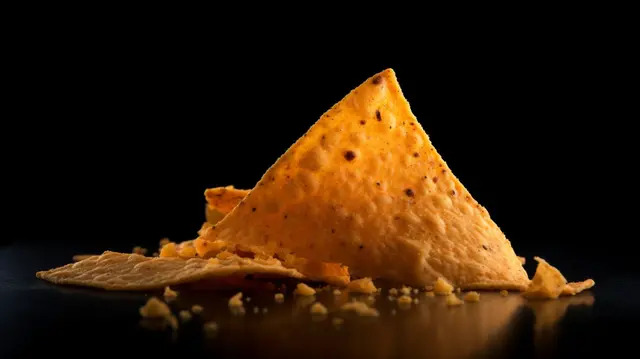
Doritos’ and Self-expression marketing
Doritos has introduced its inaugural international campaign and brand theme, “For the Bold in Everyone,” as revealed in information shared with Marketing Dive. The initiative aims to encourage individuals to embody boldness, self-expression and “be triangles in a world of circles.” Crafted by Goodby Silverstein & Partners, the campaign comprises three advertisements and a global film spotlighting a grandmother driving a monster truck. In the U.K., the campaign encompasses social and digital advertising produced by PepsiCo’s in-house creative agency, Sips & Bites. The “For the Bold in Everyone” campaign will kick off in the U.K. before expanding to Australia and European markets, including Spain and the Netherlands in the first quarter. A subsequent rollout is planned for Latin America and other strategic markets throughout 2024. Doritos intends to position its Frito-Lay snack on the global stage by urging consumers to reevaluate personal biases, embrace their passions, and express themselves. Fernando Kahane, the head of global marketing for Doritos, asserts that the campaign seeks to redefine and modernize the concept of “bold” to resonate with new generations. Kahane emphasizes the significance of brands aligning with certain beliefs, stating, “Today’s consumers want brands that believe in something.” He explains that “For the Bold in Everyone” strives to strike a delicate balance between conveying a perspective and providing entertaining and humorous content that stays authentic to the brand and the snack category overall. The theme of self-expression, adopted by brands like Gap, Vans, and 7-Eleven, is central to Doritos’ global campaign. The company aims to navigate potential culture war controversies by carefully managing its viewpoint and delivering amusing content. The U.K. launch features in-house content celebrating personalities who embrace their “edges and passions,” including figures such as female footballer Chloe Kelly, Britain’s oldest grime MCs Pete & Bas, blind pro skateboarder Dan Mancina, and the “Dancing Granny” Colette Zacca. The campaign is scheduled to roll out globally throughout the year. In the United States, Doritos will make a return to the Super Bowl with a commercial starring actors Jenny Ortega and Danny Ramirez.

Shashank Kumar and the story of Dehaat
Shashank Kumar’s departure from his lucrative consulting position at Beacon, following his graduation from IIT Delhi, left everyone astonished. Opting for an unconventional path, he returned to his hometown in Chhapra, Bihar, with the ambitious goal of entering the field of agriculture.In Bihar, where 95% of farmers owned less than two acres of land and earned a mere Rs 70,000 annually, Shashank identified the solution in cultivating high-value crops. Despite initial skepticism from local farmers, the 24-year-old entrepreneur sought alternative approaches to gain their trust.To build credibility, Shashank collaborated with farmers, recognizing that the challenges extended beyond crop cultivation to encompass the entire value chain, from seed to market. In 2012, this endeavor led to the establishment of Dehaat.Aptly named, Dehaat aimed to address the challenges faced by rural India through a comprehensive model, offering crop advisory services and access to high-quality inputs. While the initial attempt involved a call center for advisory services, Shashank quickly realized the need for a more personal touch.Understanding that farmer trust required a face-to-face approach, Shashank introduced a network of local agents known as “Krishi Saarthis.” These agents, familiar with the farming community, took orders for seeds, fertilizers, and pesticides, marking the beginning of Dehaat’s growth.Dehaat’s personalized crop advisory gained popularity, attracting significant orders from farmers. Recognizing the potential for scalability through technology, Shashank sought investment, facing numerous rejections from investors who doubted the model’s scalability.Despite the initial setbacks, the tide turned in 2015 with the advent of 3G phones, bringing a transformation to the Agritech sector in India. Venture capitalists began taking the sector seriously, and Dehaat’s revenue reached 42.46 CR in 2019, securing its first institutional round of 30 CR led by Omnivore.With precise information on farm patterns and crop cycles, Dehaat expanded its services to include insurance and warehousing through a franchisee phygital model. By 2021, its revenue had grown eightfold to 358.2 CR, raising over 350 CR in funding across two rounds and serving 400,000 farmers in 11 agricultural states.The pivotal moment arrived in 2021 when Dehaat secured a funding of 800 CR led by Sofina and Lightrock, making it India’s most valued Agritech company at 5000 CR.Presently, Dehaat boasts a revenue of 2000 CR from orders totaling 300,000 metric tons and has acquired five agritech companies to enhance its technological capabilities and offerings.

Tushar Jani and the story of Bluedart
During the 1980s, India experienced a significant surge in exports, reaching 12.74 billion dollars, which contributed 5.74% to the GDP. However, the country faced a challenge in catering to small industries with the need to send small packages. Tushar Jani, a 30-year-old visionary, set out to address this issue.Armed with two friends and 30,000 Rs, Tushar established a company within a modest 200 sq ft space beneath a staircase in 1983, giving birth to Blue Dart. 🚀The concept was straightforward ⏩ Facilitate swift delivery of small packages through air transport. Teaming up with the UK’s Gelco Express, Tushar introduced India’s inaugural international air package express service, enabling Blue Dart to deliver as early as 10:30 AM, a feat previously unimaginable. 🤯Tushar encountered overnight success, yet he recognized a lingering issue: tracking. Realizing that delivery was not the sole challenge, he developed Cosmat – a tracking software offering real-time and online traceability for all packages. This innovation marked a turning point for the logistics industry. ⏰In 1994, a historic moment unfolded as Blue Dart went public, raising 38.25 CR from the stock markets, with its IPO oversubscribed 14 times. Tushar then shifted focus to the local delivery market, triggering a revolution in the Indian logistics sector. 🇮🇳By 1995, another milestone occurred as Blue Dart acquired two Boeing 737-200 freighters, becoming the first non-government company to operate cargo aircraft in India. Expanding offices in Kolkata and launching India’s inaugural jet express airline with space monitoring software, the company reached revenues of 100 CR in November 1995. 💸Establishing its own airline, Blue Dart served over 1000 locations in India, creating a state-of-the-art superhub near Mumbai’s airport to optimize load efficiency. In 2001, the addition of a third aircraft in the Bangalore – Delhi sector propelled revenues to 287 CR. Tushar then made a pivotal decision that reshaped the company’s destiny.In 2002, Blue Dart concluded its decade-long contract with Federal Express, joining forces with the world’s top Air Express Company – DHL. This move led to the addition of two more aircraft, surpassing 100,000 shipments per day, and positioning Blue Dart as India’s largest company.On November 4, 2004, DHL acquired Blue Dart for 730 CR, marking a momentous occasion where the world’s number 1 acquired India’s No. 1. Competitors were astonished yet proud of Tushar Jani’s achievements. 🙌Tushar remained on the Board, steering DHL-Blue Dart to new heights. 📉 ➡️ In 2023, Blue Dart achieved a revenue milestone of 5000 CR, delivering consignments to 56,400 locations in India and 220 countries and territories. With over 60 hubs, six aircraft, and 12,000 delivery vehicles, it continues to dominate the industry four decades later. 💪 The saga of Tushar Jani – The man who constructed India’s largest logistics company beneath a simple staircase. 🇮🇳