

Sugar.fit has successfully secured an $11 million Series A funding round to address India’s prevalent health issue – diabetes. However, eradicating diabetes for 10 crores of Indians presents a complex challenge, and here’s why: High Sugar Consumption: India’s per-capita sugar consumption is remarkably high, with individuals consuming approximately 10 spoons of sugar daily. This translates to an average yearly intake of nearly 18 kg of sugar per person.Limited Perception of Health as an Investment: Despite the rising trend of purchasing expensive gadgets like iPhones on EMI, the perception of health as a worthy investment remains lacking. Health is often viewed as a cost center rather than a status-elevating endeavor.Need for Consumer Education: Educating consumers about their dietary choices is essential. For instance, consuming just one Vada Pav contributes around 200 calories, and the challenge lies in conveying the importance of balancing this with physical activity. Educating individuals about fitness proves to be a costly endeavor.Diabetes Reversal Requires Lifestyle Changes: While advanced devices like the Cyborg from Ultrahuman can monitor glucose levels effectively, addressing diabetes necessitates a comprehensive lifestyle transformation involving diet, exercise, and sleep. Achieving this is particularly challenging for individuals dealing with diabetes. Sugar.fit’s Approach:Sugar.fit proposes a three-layer solution to tackle these challenges: Measure: Utilizing glucose monitoring to track and understand individual patterns.Personalized Plan: Developing personalized plans encompassing diet, sleep, and fitness.Community Building: Establishing a supportive community where individuals facing similar health challenges can come together. This community-oriented approach aims to address the motivation problem by fostering a collaborative environment where individuals collectively work towards consistent action. In summary, Sugar.fit’s multi-faceted strategy acknowledges the cultural, societal, and educational aspects associated with diabetes in India, aiming to provide a comprehensive solution that goes beyond monitoring and includes personalized plans and a supportive community.
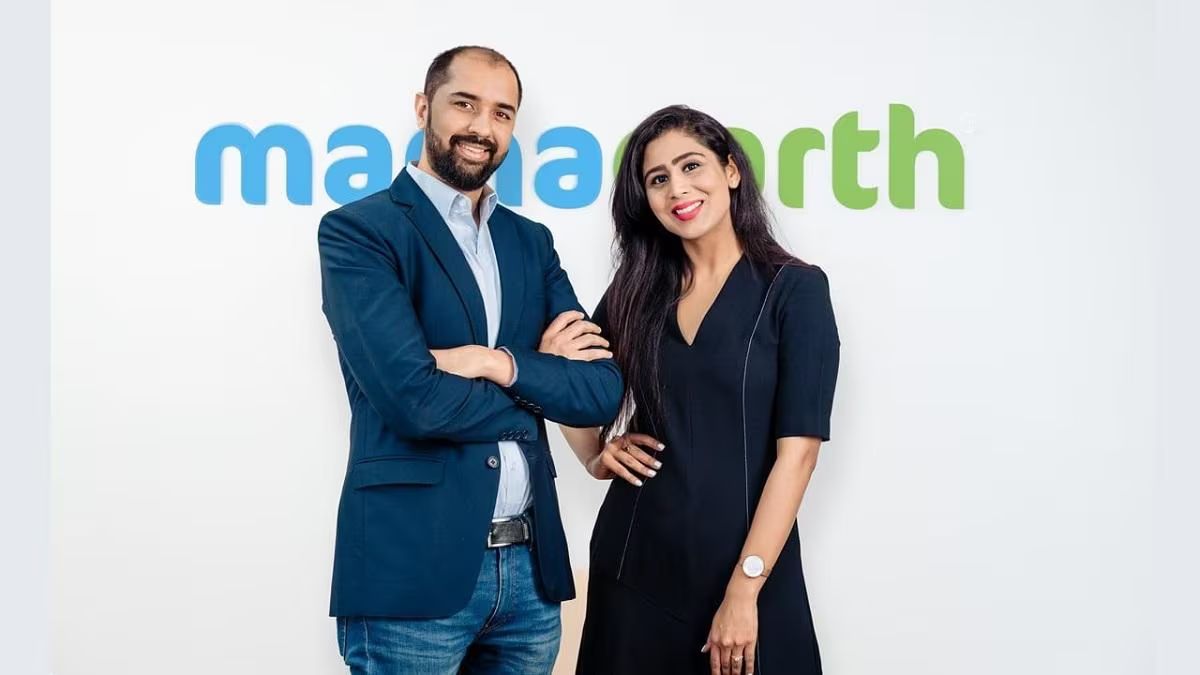
The Evolution of Mamaearth’s Success
Mamaearth is poised to achieve a significant milestone as it embarks on a remarkable journey of growth and transformation, marked by its upcoming IPO scheduled from October 31 to November 2. In this offering, the company aims to raise an impressive Rs 1,701 crore at the upper limit of the range, valuing Mamaearth and its parent company, Honasa Consumer, at a remarkable Rs 10,425 crore. The inception of Mamaearth traces back to 2016 when Ghazal, pregnant with her son, recognized the saturation of the Indian baby-care market with generic products containing harmful toxins. Faced with limited options, she decided to source 100% toxin-free products from the USA through her network of friends and family. In collaboration with her husband Varun, they set out to establish a brand that mothers in the country could trust – thus, Mamaearth was born. During the early stages, the direct-to-consumer (D2C) ecosystem was emerging with the advent of Jio. In contrast, the offline space was dominated by established giants like Unilever and Johnson & Johnson. The challenge was clear: How could Mamaearth’s products stand out? The answer, in hindsight, was straightforward – by actively listening to the needs and preferences of the mothers for whom the company was being built. From an initial offering of six product lines in December 2016, Mamaearth rapidly expanded to encompass over 140 SKUs, offering a wide range of skincare and haircare products. This growth trajectory has propelled Mamaearth to achieve an annual revenue run rate exceeding $100 million.

The Driving Force Behind BYJU’S Success: Divya Gokulnath
The Architect of BYJU’S Triumph: Divya Gokulnath Born in 1987 into an educated family in Bengaluru, Divya Gokulnath is a pioneering woman entrepreneur with an impressive journey. Her father, a Nephrologist at Apollo Hospital, and her mother, a programming executive at Doordarshan, instilled a strong focus on education. As the only child, Divya completed her schooling at Frank Anthony Public School and earned a bachelor’s degree in Biotechnology from RV College of Engineering in Bengaluru in 2007. Post-graduation, Divya initiated GRE tuitions, where she crossed paths with Byju Raveendran. Influenced by her, she joined Byju’s and started teaching mathematics, English, and logical reasoning. Career Upliftment:Divya’s career with Byju’s commenced in 2008, focusing on in-person education. In 2015, she played a pivotal role as Byju’s ventured into online education with video lessons, showcasing Divya as a teacher in the videos. Apart from teaching, she has written extensively on educational topics, parenting, and women’s participation in STEM fields. Married to Byju Raveendran, the couple, along with Riju Raveendran, collectively contributed to Byju’s becoming a $3.05 billion enterprise. They live in a joint family of 11 members, and Divya became a mother of two, managing her professional responsibilities, especially during the pandemic when remote work became the norm. Role in BYJU’S Success:As a co-founder of Byju’s, Divya Gokulnath has been instrumental in the company’s growth. She introduced innovative teaching methods, making learning accessible and enjoyable. Byju’s, founded in 2015, offers a learning app for classes 4 to 12, covering competitive exams like JEE, CAT, NEET, and IAS. Under Divya’s guidance, Byju’s boasts over 42 million registrations and 3 million annual paid subscriptions, providing engaging and visual lessons. She implemented strategic collaborations with schools, offering free education through the app, and the company received substantial backing from prominent investors. Divya’s dedication and hard work have earned her recognition, featuring on LinkedIn’s Top Voices in 2019 and 2020, Business Today’s Most Powerful Women in Indian Business, Femina Power list in 2020, and Forbes’ acknowledgment. In 2021, she received the Entrepreneur of the Year and Women Who Make India Awards. Divya Gokulnath stands as a symbol of success and empowerment in the field of education and entrepreneurship.
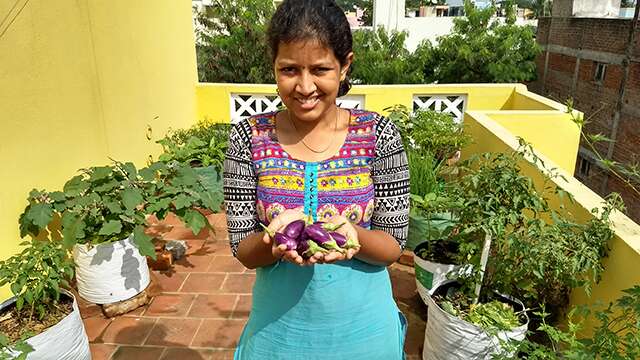
The remarkable strides Archana Stalin has taken in her entrepreneurial journey.
Archana Stalin is a resilient entrepreneur who didn’t let the failure of her first venture at the age of 22 deter her ambitions. Treating the setback as a practical MBA, she absorbed valuable lessons and patiently waited to launch her second venture. Six years after the closure of her initial business, Archana founded myHarvest Farms, a company dedicated to delivering fresh, organic produce to over 800 customers in Chennai. Starting with terrace gardening, she and her husband later secured a two-acre farmland in Sembedu village, Tiruvallur district, about 40 km from Chennai, named Vembu Farms. The journey wasn’t without challenges, but this time, Archana seemed to have cracked the success formula. In the first year (2018-19), the company’s turnover was Rs 8 lakh, which soared to Rs 44 lakh in the second year and reached an impressive Rs one crore in the last year. Archana’s entrepreneurial spirit took root even before her first venture. At 21, she made a pivotal life decision by marrying her college classmate, Stalin Kalidoss, against familial opposition. In 2012, the couple founded Geoverge, a geospatial company, investing about Rs 10 lakh, only to close it within two years. Undeterred, Archana gained experience in different roles, eventually joining the NativeLead Foundation in Madurai and Naturals Salon in Chennai. However, her interest in organic farming led her to quit her corporate roles and, in collaboration with her husband, establish myHarvest in November 2016. Starting small with terrace gardening, the couple soon leased a two-acre land, incorporating myHarvest Farms as a private limited company. The initial focus was on helping people grow greens and vegetables in urban spaces, but they soon realized the limitations of terrace gardening. Transitioning to organic farming on a larger scale, they established the Vembu Farm, involving both farmers and consumers in a community-oriented approach. The subscription model attracted families who paid a three-month fee, providing the necessary capital. The venture grew steadily, with the couple adding more farms and expanding their customer base. The Covid-19 pandemic posed challenges, but myHarvest Farms adapted its delivery model and thrived when other supply chains faltered. The switch to an order-based, cash-on-delivery model proved successful, and the business expanded beyond vegetables to include oils, rice, and snacks. With a strong emphasis on building a community that connects people to nature and healthier food choices, Archana’s myHarvest Farms has become a flourishing venture, delivering fresh, organic produce to families while fostering a sense of unity among farmers and consumers.

Emotive storytelling
In marketing, emotive storytelling harnesses human emotions to craft narratives that deeply engage audiences. When executed effectively, emotive storytelling can leave a lasting imprint, enhancing brand recall and fostering loyalty. Here are strategies for employing emotive storytelling in marketing: Real-life Narratives:Present authentic stories of individuals benefiting from the brand, humanizing it and making it relatable and memorable.Hero’s Journey:Frame your products or services as the hero aiding customers in overcoming challenges, following the traditional narrative structure of a hero’s journey.Address Universal Themes:Tap into universally relatable themes like love, family, ambition, or perseverance to evoke strong emotional responses.Evoke Nostalgia:Transport the audience to a simpler time or specific moments in their past, creating an emotional connection linked to your brand.Dramatic Visuals:Use high-quality imagery or videos that align with the story’s mood and tone, enhancing the emotional impact.Authenticity:Ensure that emotional narratives are authentic; consumers can sense when brands are not being genuine.Interactive Stories:Engage the audience by involving them in the story through interactive videos, polls, or augmented reality experiences.Embrace Vulnerability:Showcase brand vulnerabilities or failures and illustrate how they were overcome to create a transparent relationship with consumers.End with a Positive Note:Even if the story begins with a challenge, concluding on a hopeful or positive note can enhance memorability and leave a positive impression.Consistency Across Platforms:Maintain a consistent emotive narrative across all marketing channels for a cohesive brand image.Empower the Consumer:Position the consumer as the protagonist, highlighting how the brand plays a pivotal role in their personal story or journey.Engage the Senses:Utilize sound, textures, or scents, if applicable, alongside visuals to create a multi-sensory experience that deepens the emotional connection. By leveraging emotive storytelling, brands can establish profound connections with their audience, leading to increased engagement, loyalty, and enduring brand recall.

The incredible story of Rebel foods
The Uber founder is venturing into the cloud kitchen domain. However, around 12 years ago, two Indian founders initiated the development of a cloud kitchen company that is currently generating an annual revenue of 900 Crores. This is the fascinating story of Rebel Foods: It’s crucial to clarify that Rebel Foods is distinct from Zomato or Swiggy; it doesn’t operate as a food delivery tech platform. Rather, it operates more like a chain similar to McDonald’s but with a key distinction – a primary focus on an online delivery revenue model. Rebel Foods boasts impressive statistics: 4,000 virtual restaurants350+ cloud kitchensPresence in 40 cities (tier 1/2)Operations in 7 countries India has 3 crore restaurants with 90 lakh workers, and only 30% fall under the ‘organized’ sector. The rest are comprised of dhabas, food trucks, street stalls, and hawkers. The disruption in the food industry has been limited to the organized sectors. So, what did Rebel Foods successfully navigate? Let’s delve into the key aspects: Overcoming Location Challenges: The revenue potential of a single food joint is closely tied to its location. When Rebel started as FAASOS with 50 locations, it struggled to break even due to high rent costs. Online Take-Aways Dominate Revenue: Small eateries serving on platforms like Swiggy and Zomato generate a significant portion of their revenue online. Rebel questioned the need for physical stores when online customers didn’t frequent them. Emphasis on Software Engineers over Chefs: Recruiting and retaining skilled chefs is a common challenge for Dhaba owners. Rebel addressed this by creating extensive Standard Operating Procedures (SOPs) and automations for each recipe. Reducing Raw Ingredient Wastage: Restaurants often struggle with balancing supply and demand, leading to food wastage. Despite multiple brands in one kitchen, Rebel reduced wastage to less than 2% for most outlets. Non-Linear Scaling in Cloud Kitchens: Between 2016 and 2018, Rebel opened 50 new cloud kitchens (a 30% growth) while achieving a staggering 500% revenue increase. Each of the 50 locations translates to 900 individual brands on Swiggy and Zomato. Shared Common Costs: Rebel kitchens operate without server staff, and the cleaning staff serves the entire kitchen. This results in extremely low operational expenditure per brand, with a capital payback period of less than 12 months (typically, it takes 3 years). Plug & Play for Direct-to-Consumer (D2C): Businesses like SLAY Coffee leveraged Rebel’s model, scaling to 100+ locations in 12 months. Other notable additions include Wendy’s, Mad Over Donuts, Haldiram, Chai Point, and Anand Sweets. The only caveat is that this entire model relies on Swiggy and Zomato, meaning Rebel doesn’t own its customer base, a challenge that Domino’s has effectively addressed.

Carbon Tax and the challenge to Exports
The European Union (EU) has initiated a Carbon Border Adjustment Mechanism (CBAM) to address carbon emissions related to imports. The first phase of CBAM requires importers in the EU to disclose the greenhouse gas emissions linked to the production of goods in sectors like iron and steel, aluminium, cement, electricity, fertiliser, and hydrogen. During the initial phase, reporting these emissions is voluntary until December 31, 2025, after which penalties will be imposed for non-compliance. It’s crucial for Indian exporters to provide the necessary emission information to their EU importers to prevent potential trade disruptions. The CBAM has the potential to significantly impact India’s exports to the EU, constituting about 11% of India’s merchandise trade. India exports goods worth approximately $64 billion to the EU annually. However, Indian exporters are grappling with challenges in complying with CBAM due to a lack of understanding of the regulations and the absence of a domestic carbon pricing policy. Sectors covered under CBAM include iron ore and concentrates (19.9%), steel products (20%), iron and steel (31.4%), aluminium products (27.7%), cement (6.1%), and fertiliser (0.7%). Among these, 25% of engineering exports, the largest contributor to India’s exports at around $1.51 billion, could be significantly affected by CBAM. The implementation of the CBAM underscores the increasing global focus on environmental sustainability and the need for businesses to adapt to evolving regulatory frameworks.
Smaller cities foster festive buying
Smaller cities in India have emerged as significant contributors to the online festive season sales, with platforms like Amazon, Flipkart, and Meesho experiencing a surge in orders from Tier 2 cities and beyond. During the initial days of festive sales, approximately 80% of all orders came from non-metro cities for platforms like Meesho and Flipkart, while the figure was 60% for Flipkart alone. Cities such as Dhanbad, Vapi, Chittorgarh, Erode, Jabalpur, Tezpur, and Kurnool were among the top contributors to Meesho’s orders. This trend reflects the growing economic development, increased internet penetration, and rising aspirations in smaller cities, emphasizing the need for e-commerce companies to tailor their strategies to cater to these markets. According to Unicommerce, the share of Tier 2 and 3 cities in India’s e-commerce market grew significantly last year, surpassing that of Tier 1 cities.
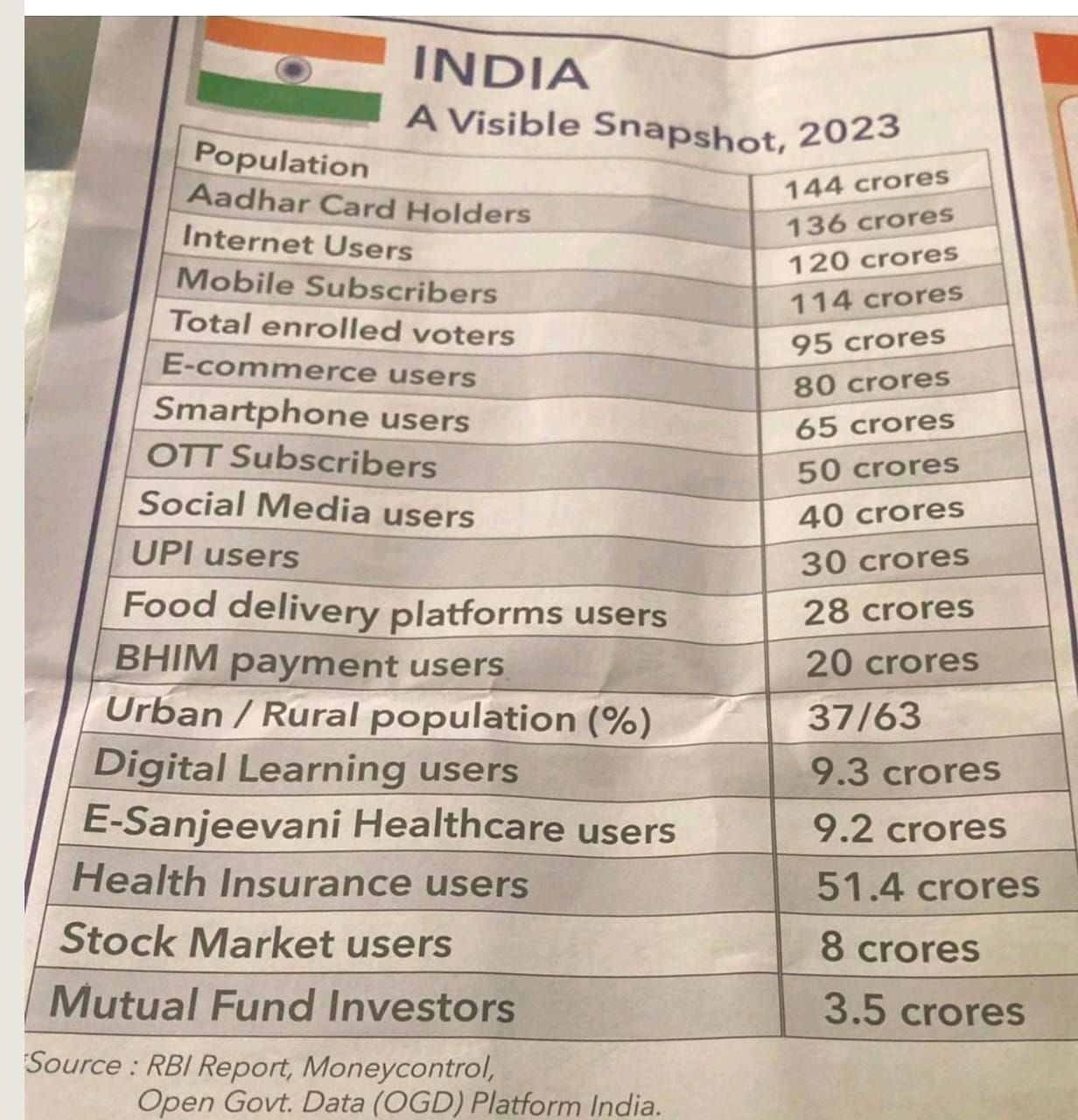
How do Indian consumers want their costs to be?
“I hear people say Indian consumers only want cheap products, making it impossible to build a profitable consumer brand here,” remarked a founder at a startup event. However, this perspective may stem from a misunderstanding of the consumer landscape in India. With a population of 144 crore people, including 120 crore internet users, 30 crore unique UPI users, 28 crore food ordering users, 9 crore online learners, 8 crore income tax filings, and 3.5 crore mutual fund investors, India presents a diverse market. Analyzing income tax reports reveals that the middle class significantly drives consumption in terms of percentage. While only 0.27 crore Indians earn ₹1 crore or more (growing 50% YoY), 4.65 crore Indians earn ₹5 lakh or more (growing 250% over 2 years). The middle class engages in substantial spending on real estate, education, shopping, and travel. In the context of a $100 million revenue game in India, there are two options:Option A → Build a $10,000 Average Revenue Per User (ARPU) for 10,000 Indians.Option B → Build a $10 ARPU for 1,00,00,000 Indians. It’s emphasized that a product can’t cater to both ends of the spectrum simultaneously. Many consumer brands find themselves stuck by developing low ARPU offerings and complaining about the lack of market depth. There is no depth for low ARPU, making it essential to choose a specific audience. The framework to consider includes: Build ‘value’ for the right audience, recognizing that not every consumer brand needs to target 10 crore Indians.’Communicate’ the product value by positioning it either on the lower or extreme higher end, ensuring the target audience deeply understands the product’s benefits and relevance.Get them to “experience” the value, as India’s trust deficiency demands genuine proof of a product’s worth before the first purchase.Capture the right amount of ‘value,’ making pricing straightforward when the previous steps are well-executed. Ultimately, the question of who a brand is building for becomes crucial. Asking this question within the team can provide clarity and guide strategic decisions.

Meet Mr. Amarnath, the man behind the brand “The South Indian Coffee House”
COFFEE – The mere mention of this 2 syllable word brings an aura of its aroma to the olfactory organ. It stimulates the taste buds. Needless to say that slouching in an easy chair, a cup of South Indian filter coffee and the morning newspaper go hand in hand. Sipping a hot cup of coffee is an emotion for most of us Indians. The coffee plant was discovered around 800AD and since then there has been constant innovation around the product. There are humungous health benefits related to consumption of coffee. It slows the progress of dementia, it safeguards the liver, promotes heart health and lowers mortality risk. Just as International Coffee Day was observed on 1st October, we have a gripping tale of the man behind the brand “The South Indian Coffee House”. This brand needs no introduction. EARLY CHILDHOOD EXPERIENCES Mr.Amarnath was born and brought up in an agricultural family in Kangeyam, a small town in Tiruppur district. He had an advantage of not being a first-gen entrepreneur. His inspiration and pillar of support is his father whom he hails and adores. He was always included in his father’s ventures right from his childhood – be it accounts, packaging, logistics or sales. He even reminisces that he used to sell guavas from his farm. MY PROTAGONIST – MY FATHER Mr. Amar’s dad was a visionary and forward-thinker in many ways than one. His father was a pioneer in bringing fly ash bricks to TN. He was an avant-gardist in selling 1 rupee sachets of gingelly oil that were used for lighting lamps in temples in TN. This veteran was also the first trailblazer to bring AGMARK license for 1 rupee oil sachets & packaged coconut oil. No wonder, Mr. Amar shows so much of his father’s traits. EDUCATION Mr.Amar was actively in sales right from the age of 7. He was raised street smart. He completed schooling in Kangeyam. He completed his engineering degree in Computer Science at Trichy due to his father’s wishes. He started working in Chennai soon after his under graduation. Interestingly, he worked with BYJU Raveendran for a brief period. He completed MBA from IIPM. He learnt industry experience regarding sales & marketing during PG days. He is also a gold medalist and was recruited at Naukri.com (sales profile & achieved targets easily). He says that his only intention was always to start a business and that he took up a job just to gain hands on knowledge about the market. FROM EMPLOYEE TO EMPLOYER From the horse’s mouth – “To find out what you love doing is very difficult. It may take a moment for some or quite some years for many. Most people don’t even realize that they don’t love what they do.” STARTED THE FIRST COFFEE KIOSK IN ERODE In 2014, he didn’t have much savings. He was advised to take a franchise for a coffee shop by a comrade. As the adage goes, “ Failure is the stepping stone to success”, Mr. Amar is quite quirky when he says, “Fortunately, it was a drastic failure”. The learning curve started from there. His meeting with Mr. Chandramohan of Hatsun was the game-changer. Mantra learnt from him- “Location is a very important aspect in the retail market.” It took quite some time for him to understand this. He was surprised that his target customers did not turn up to his kiosk though he gave best quality & service. It took a lot of determination and commitment for him to understand and rectify this issue. It is quite cinematic when he jokingly says that his first 3 employees betrayed him on the 1st day of his 1st start-up. As life always throws up surprises, he was hand-down on the floor for promoting & serving customers. He identified & trained his employees for his brand. What an irony that the owner of a chain of coffee shops does not drink coffee! MY BRAND – MY LIFELINE He started his brand with a very fascinating & catchy name. He along with his wife floated a Pvt. Ltd. Co. Deleting all the probabilities of failure, he came up with a success formula. He started back in 2017. Now, the brand houses 15 branches in Coimbatore & 2 in Chennai –All company owned, company operated outlets. He states that each and every day you have to work on the cost & sales. He says that investment in a coffee shop is much lesser than investing in a restaurant. So, new players keep pitching in every now and then and they become competitors. “We have NO USP. Our motto is to give Good coffee, Good service, Good location and best possible price ”says Mr.Amar. SECRET OF SUCCESS – how does he keep his coffee brewing? Their star product was ‘Ragi vada’ in their initial years. Nobody could replicate it. The raw materials were procured and ground by them. The key is to do extraordinary things using ordinary people. SENSE OF SATISFACTION Mr. Amar has never related himself with his brand. Whenever he was in his outlet, no one but his employees knew that he is the CEO. He always felt happy when someone spoke to him about his brand. He genuinely saw it as a justification for his business. When asked about what he wishes to say young entrants into this industry, he quickly gives his view points. Either by chance or design, you cannot make quick bucks in the retail Food & Beverage industry. Despite the fact that your idea and strategy is great, one has to be patient. Work on indirect expenses, opportunity cost , volumes and service. Contemplate on the support system you get when you take up a franchise. Mr.Amar associates with kaizen and says that the bench mark is yet to be reached. They are still working on improvising the services at their stores. Mr.Amar draws inspiration from Mr.Sivaganesh, owner (Sreedevi textiles, Coimbatore). He says that ‘ his service’ is unmatched in